Snowdonia 100 Race Report: Facing the Welsh Dragon
I decided to run the Snowdonia 100 as I was looking for a hard 100-miler in the first half of the year and have been trying to run different races to change things up. The race takes place in the mountains of Wales, about 5 hours north of London, and sports the tagline: “beautiful beyond belief, savage beyond reason.” I’ve heard legends of this race with everyone calling it “way harder than UTMB.” The race has 33,500 feet of vert across 101.7 miles, but I’d find out the terrain is what sets it apart.
For a race this tough that only has one drop bag at mile 50, I knew I would need help. Local friend and athlete I coach, Trevor Moore, generously agreed to voyage with me to the far north of Europe. We landed on Wednesday morning and took 2 subways, 2 trains, and a rental car to finally arrive at our Airbnb in time for dinner.
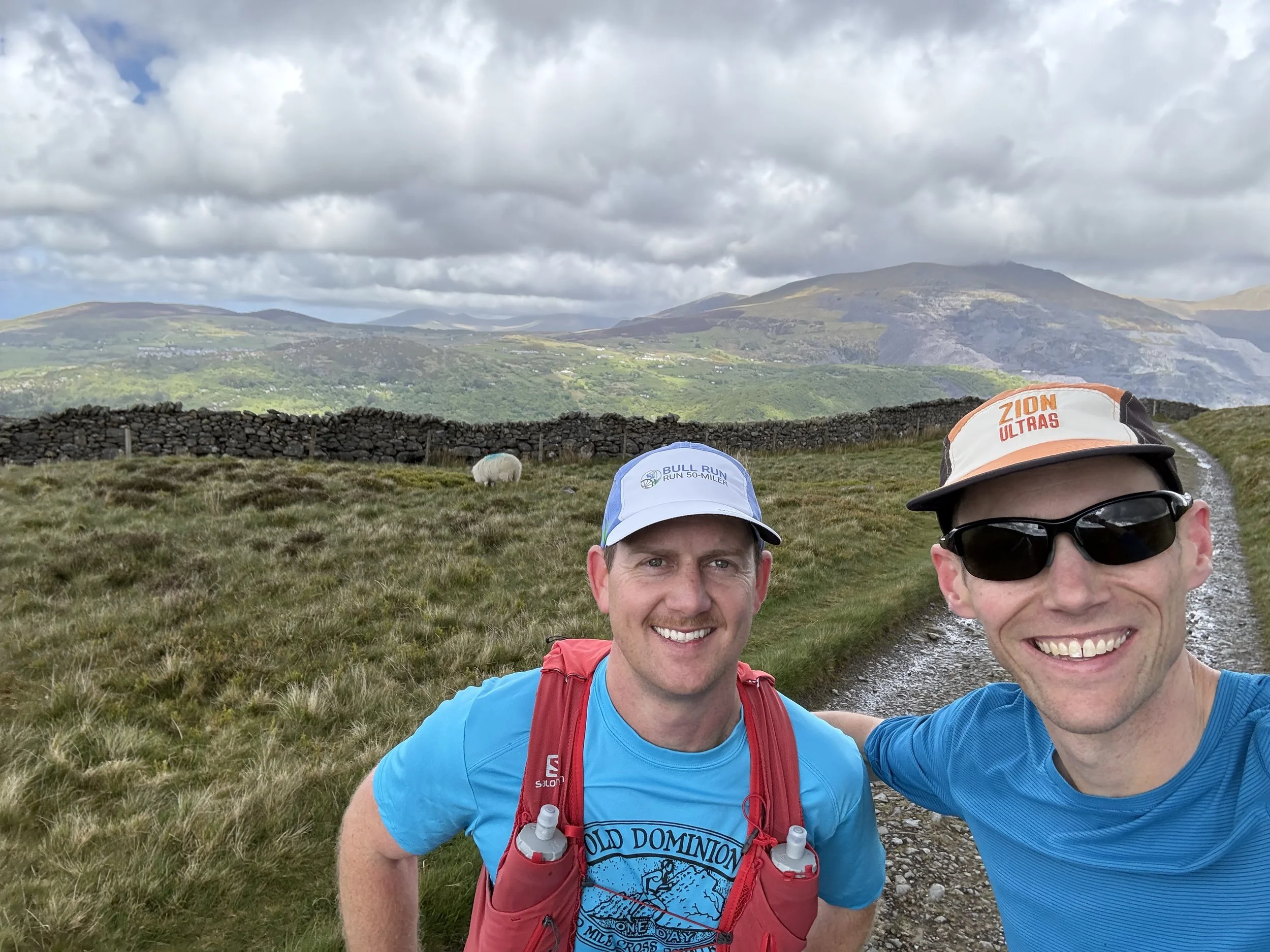
Fun and beautiful pre-race shake out
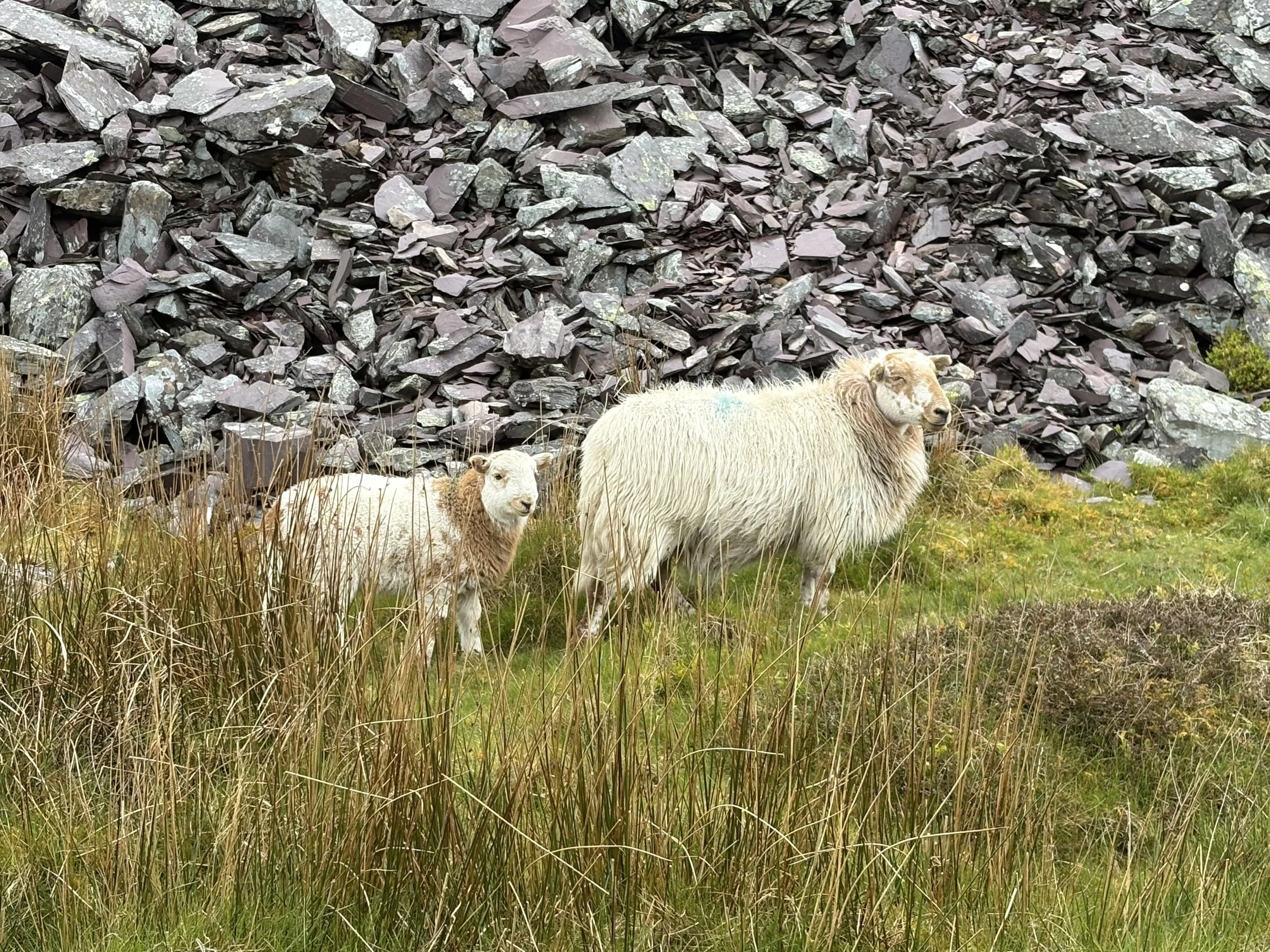
I think I saw more sheep this weekend than I’ve seen before in my life
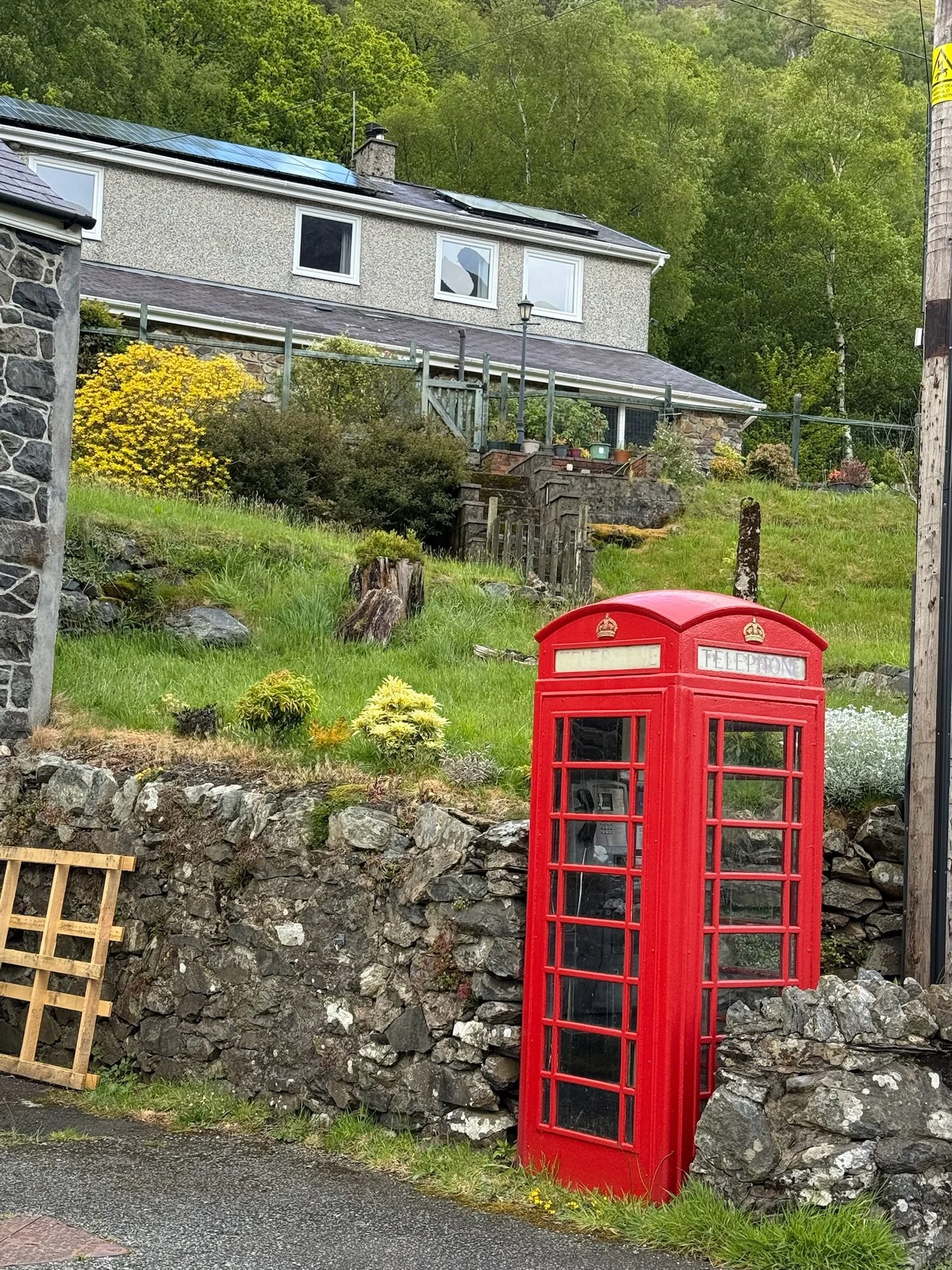
It’s bigger on the inside …
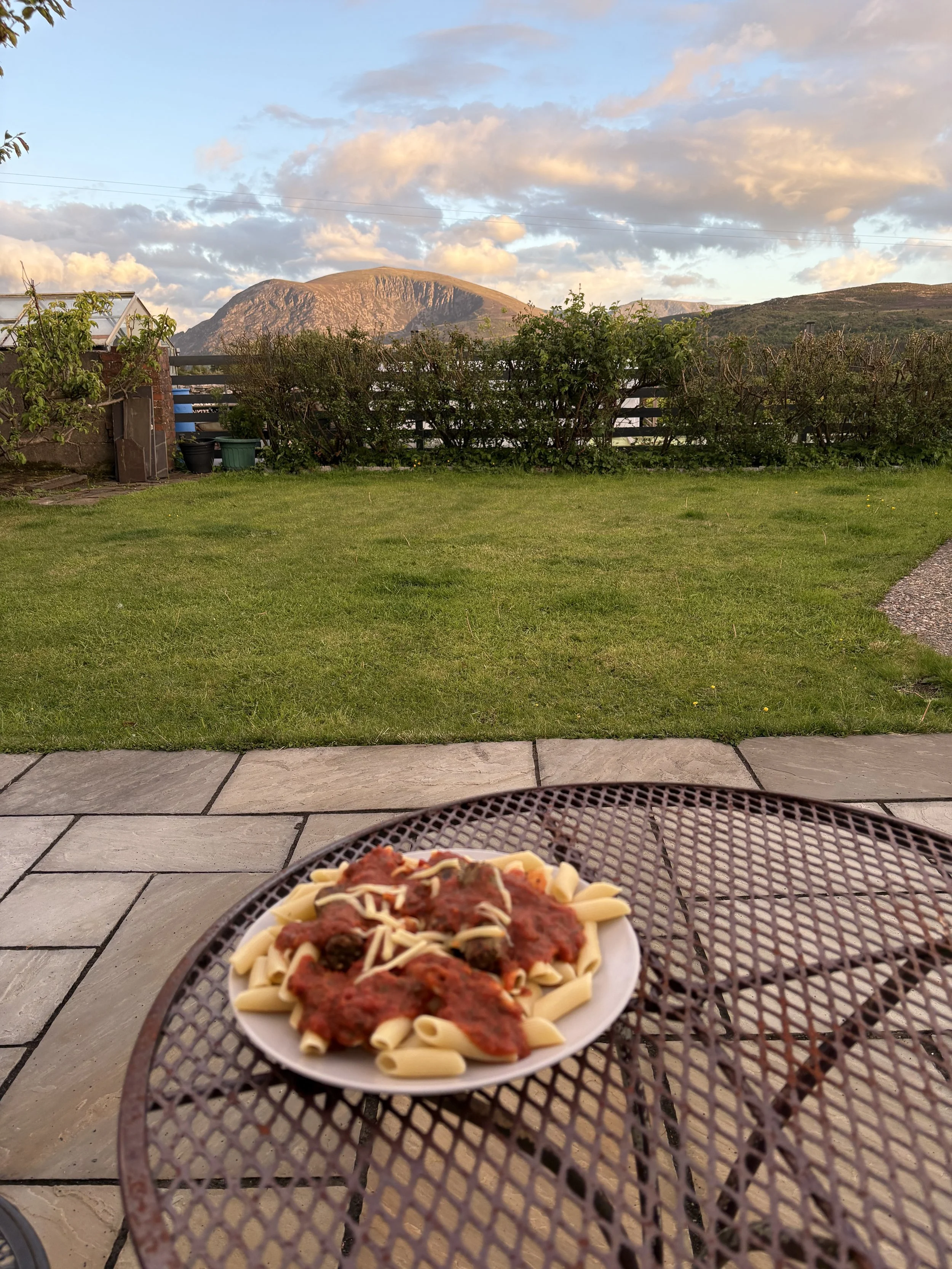
Not a bad dinner spot at our Airbnb
The race started at 2pm on Friday, and we narrowly avoided being late thanks to my flubbed logistics with the drop bag. Everything was sorted out with a full 7 minutes to spare. Fortunately, I was in the elite field courtesy of my UTMB Index, so I was able to take a separate route to the front of the corral. I found myself next to Franco Colle (4x Tor des Geants champion), Joaquin Lopez (3rd at UTMB), and Benat Marmissolle (2nd place at Tor des Geants). It was quite a surreal moment.
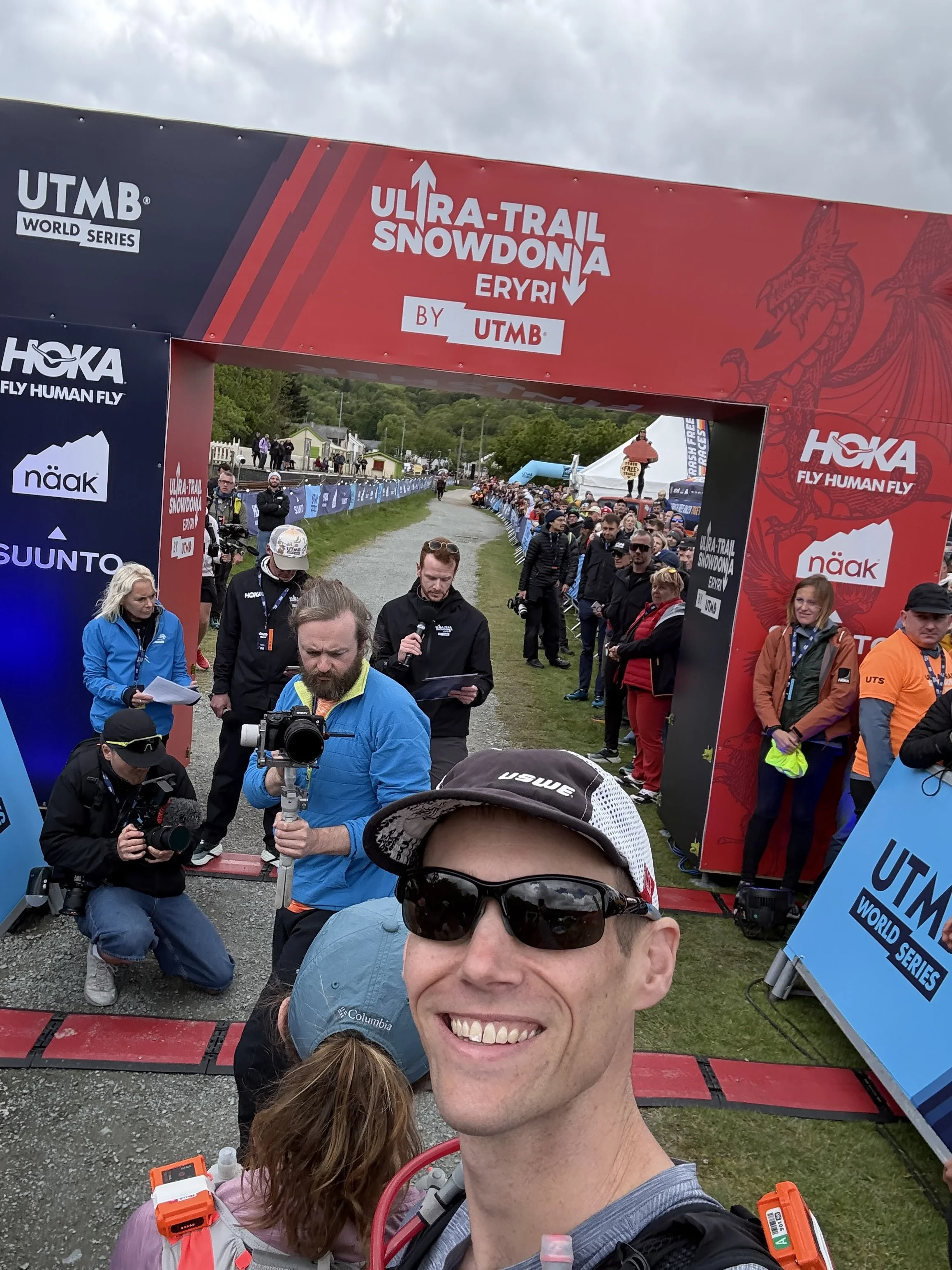
Sneaking into the elite corral just before race start
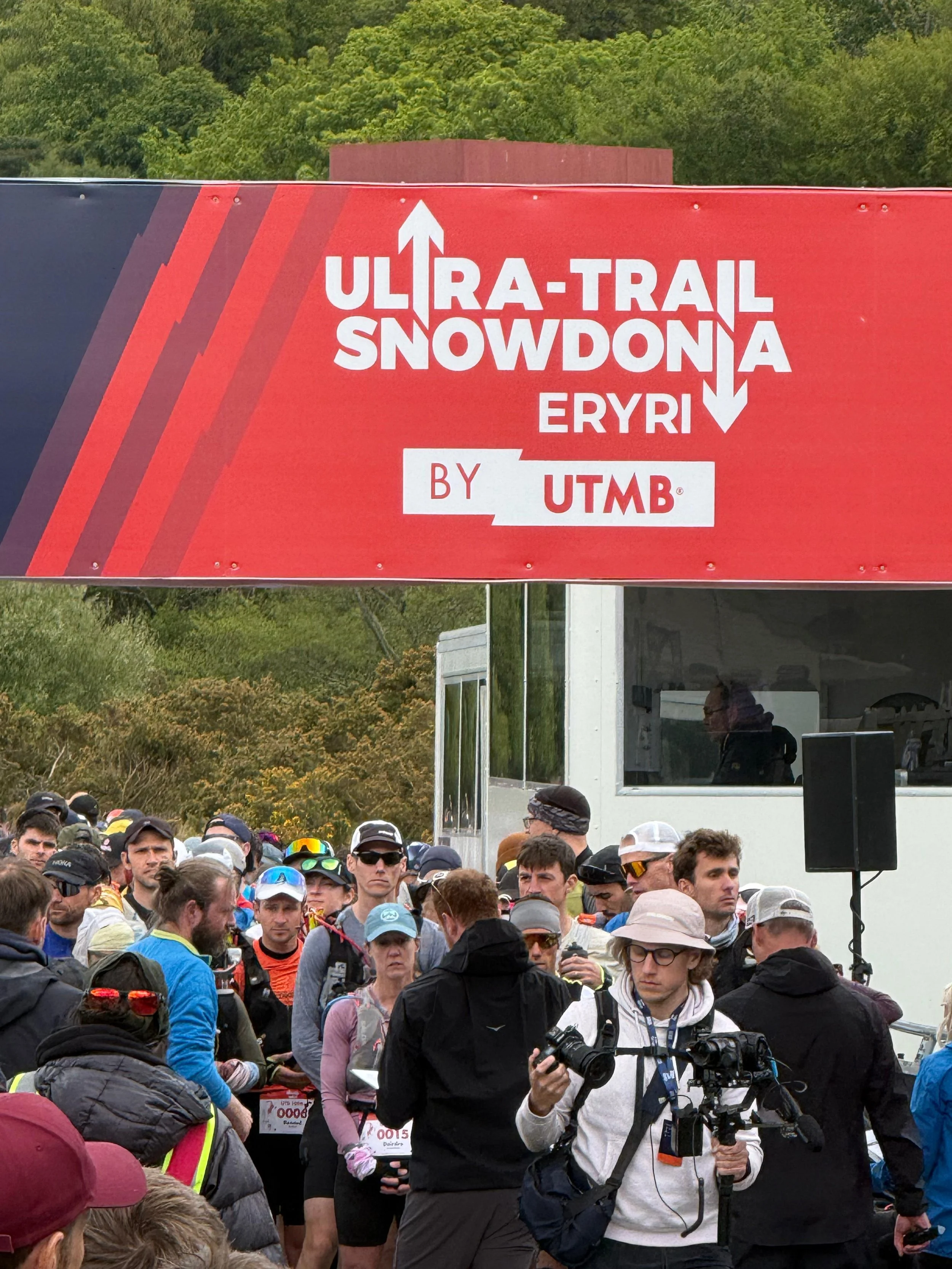
Game face: on
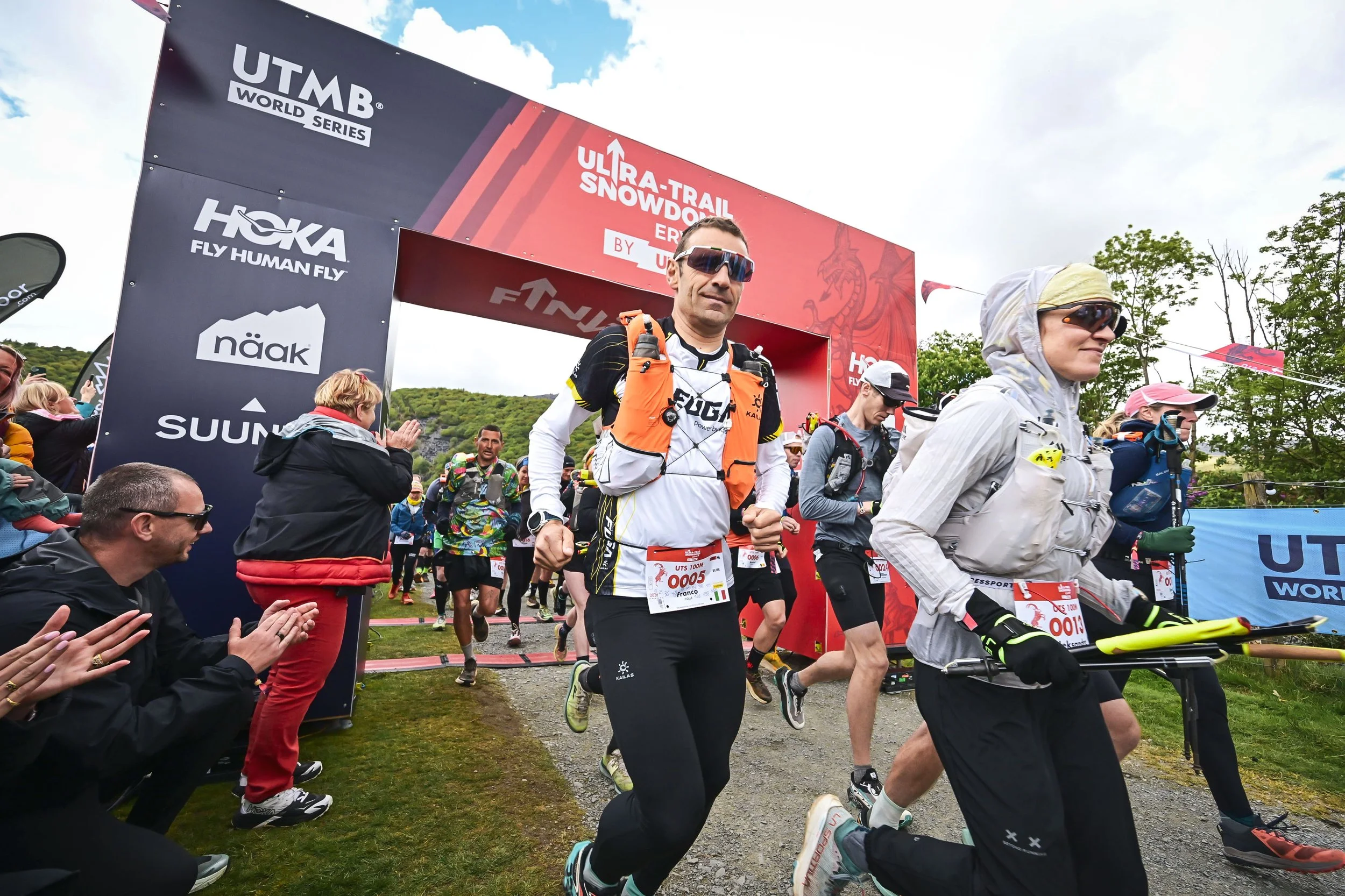
Starting my watch with the great Franco College in the foreground
Start to Dolwyddelan: Miles 0 - 36.5
They sent us off, and I clicked off 7min miles with the front of the field. We hit the real start of the climb to Snowdon, ascending 3100 feet to the highest peak in Wales. I let some runners go ahead to avoid overcooking it. Goodbye, Franco!
I felt fantastic on the climb but consciously dialed back to keep HR in check. I was surprised how many runners passed me, but we had 98 miles to go, and I wasn’t about to start racing. The top of the climb was epic with panoramic views of the wild Welsh mountains.
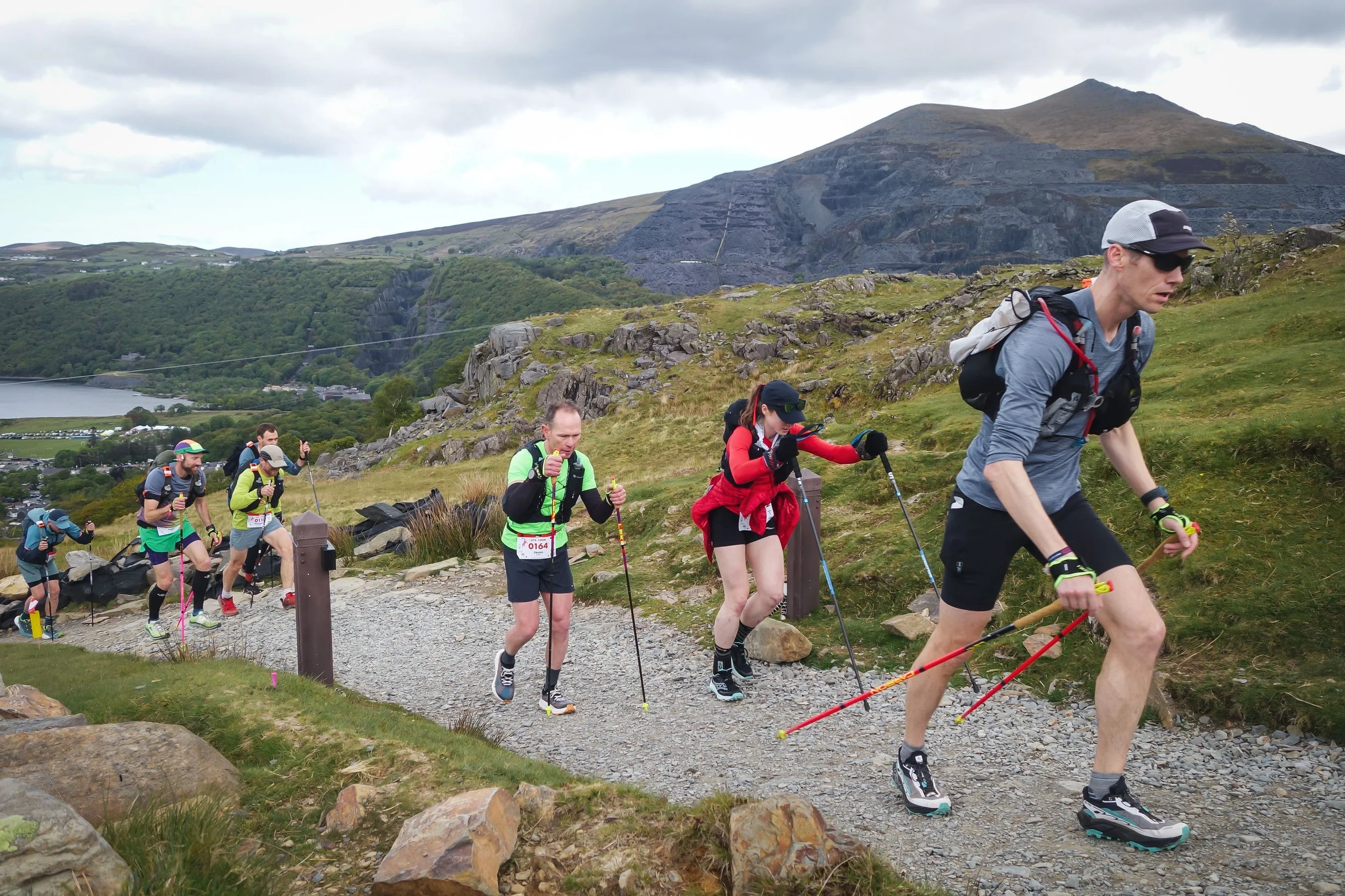
Jason (# 164) was the tremendously nice guy who would help me navigate some of the toughest sections in the back half of the race.
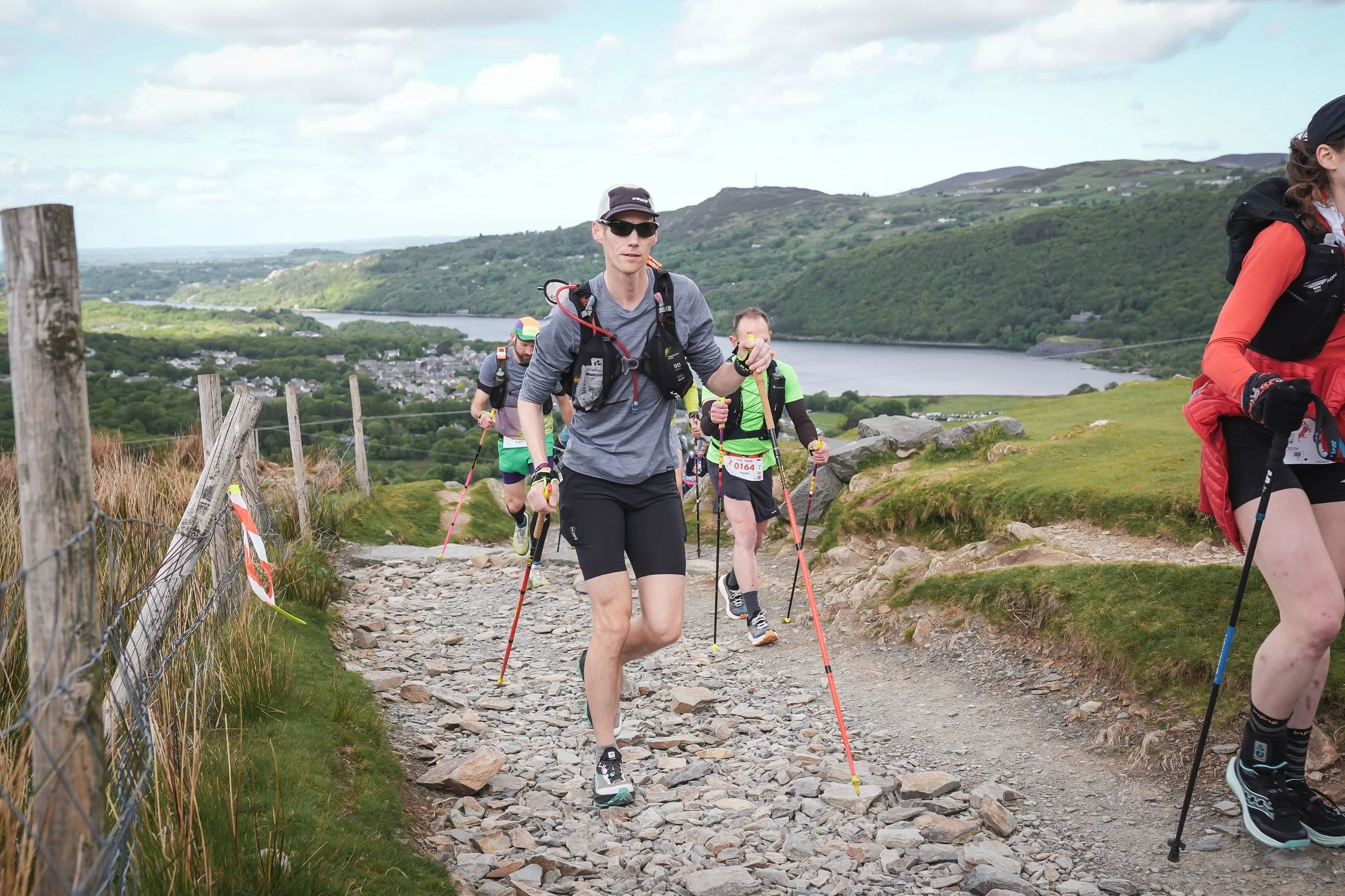
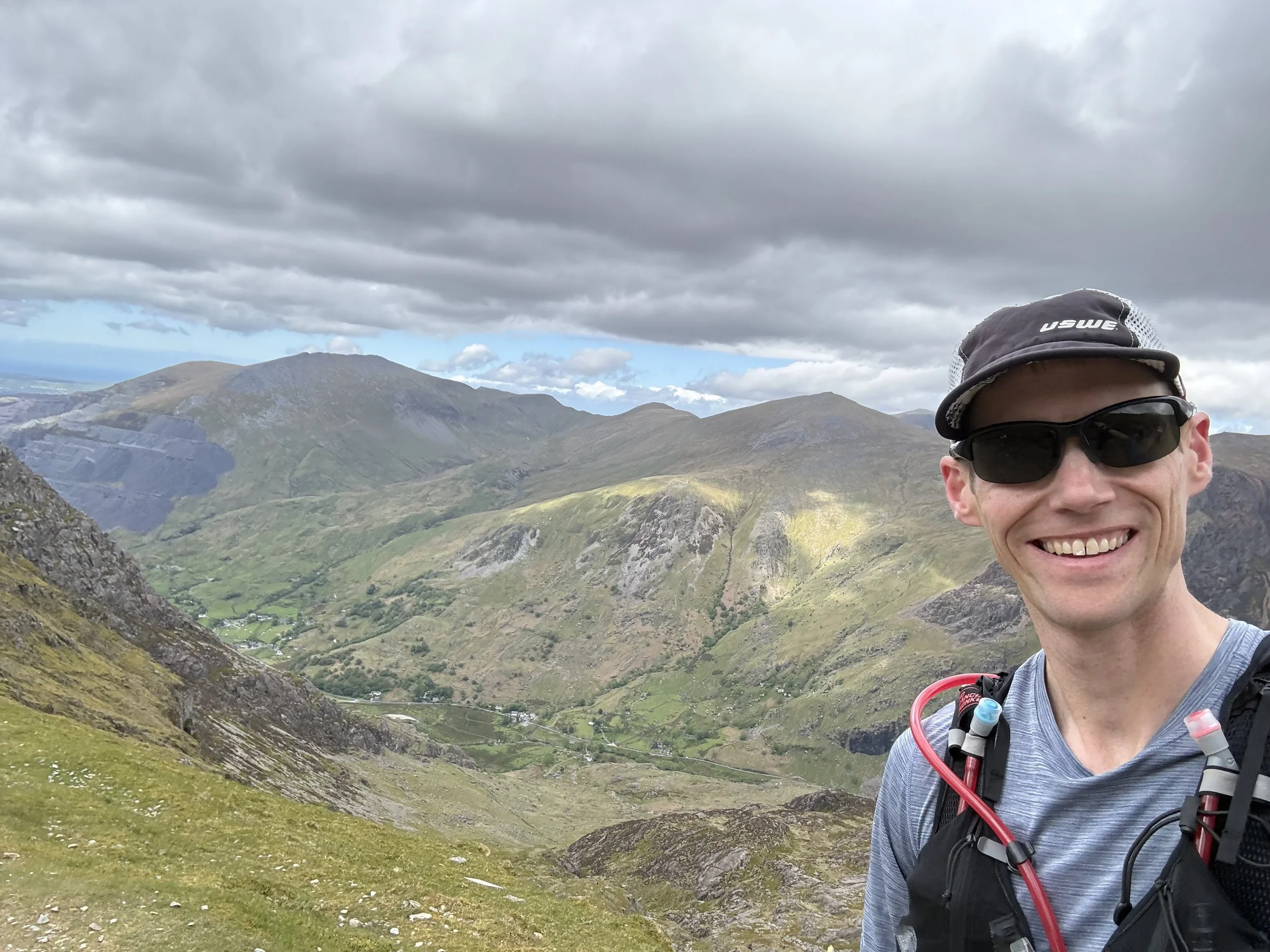
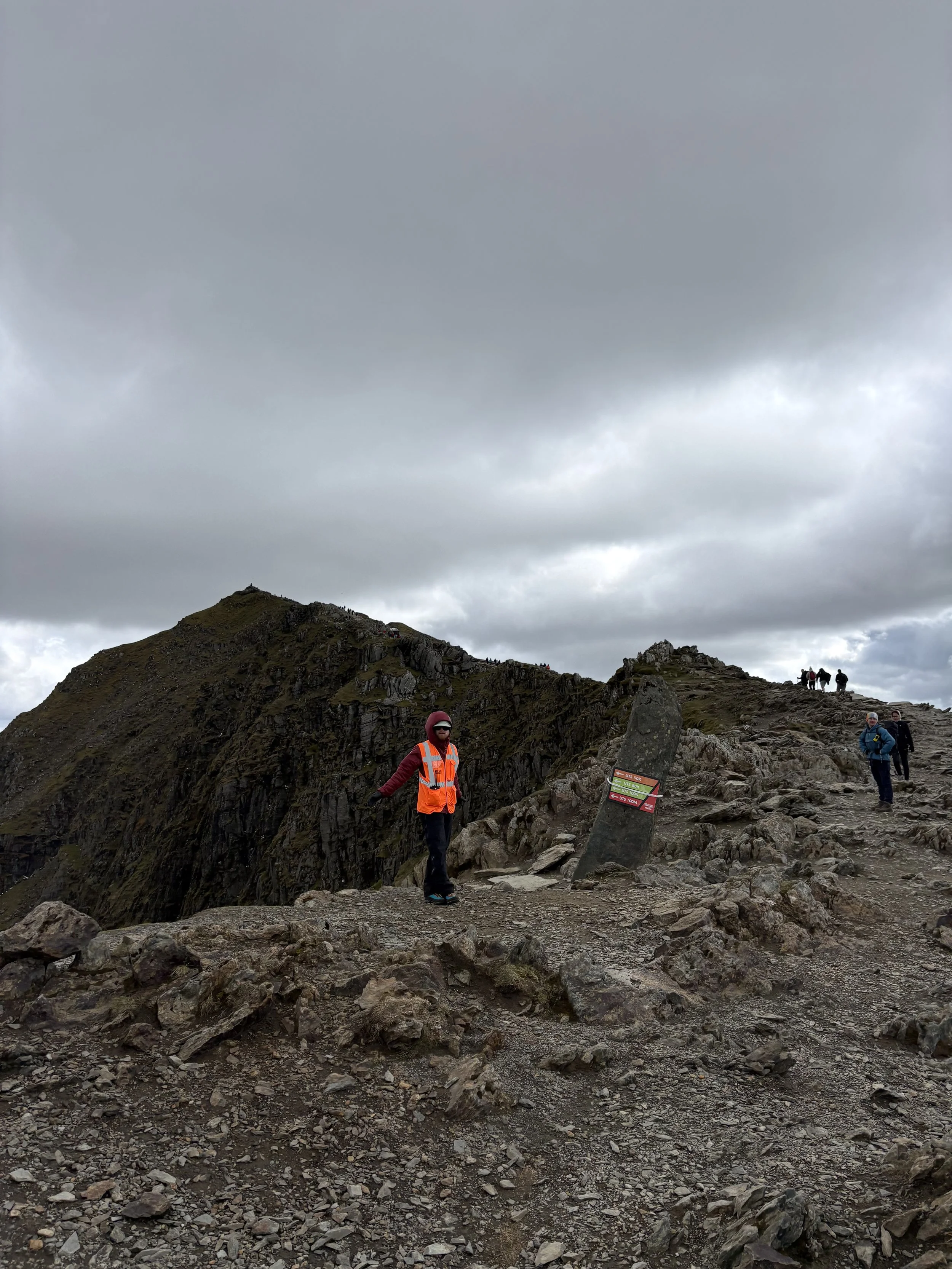
Towards the top of Snowdon, about to turn left and plunge off a cliff
We crested the summit and turned left for the steep, rocky descent. It was extremely technical, and I quickly could feel my lack of training in the mountains. Usually for a race this hard I would have spent 3+ months training in big mountains before it. Before this one I did a long road marathon block and only a few training runs on steep mountainous terrain.
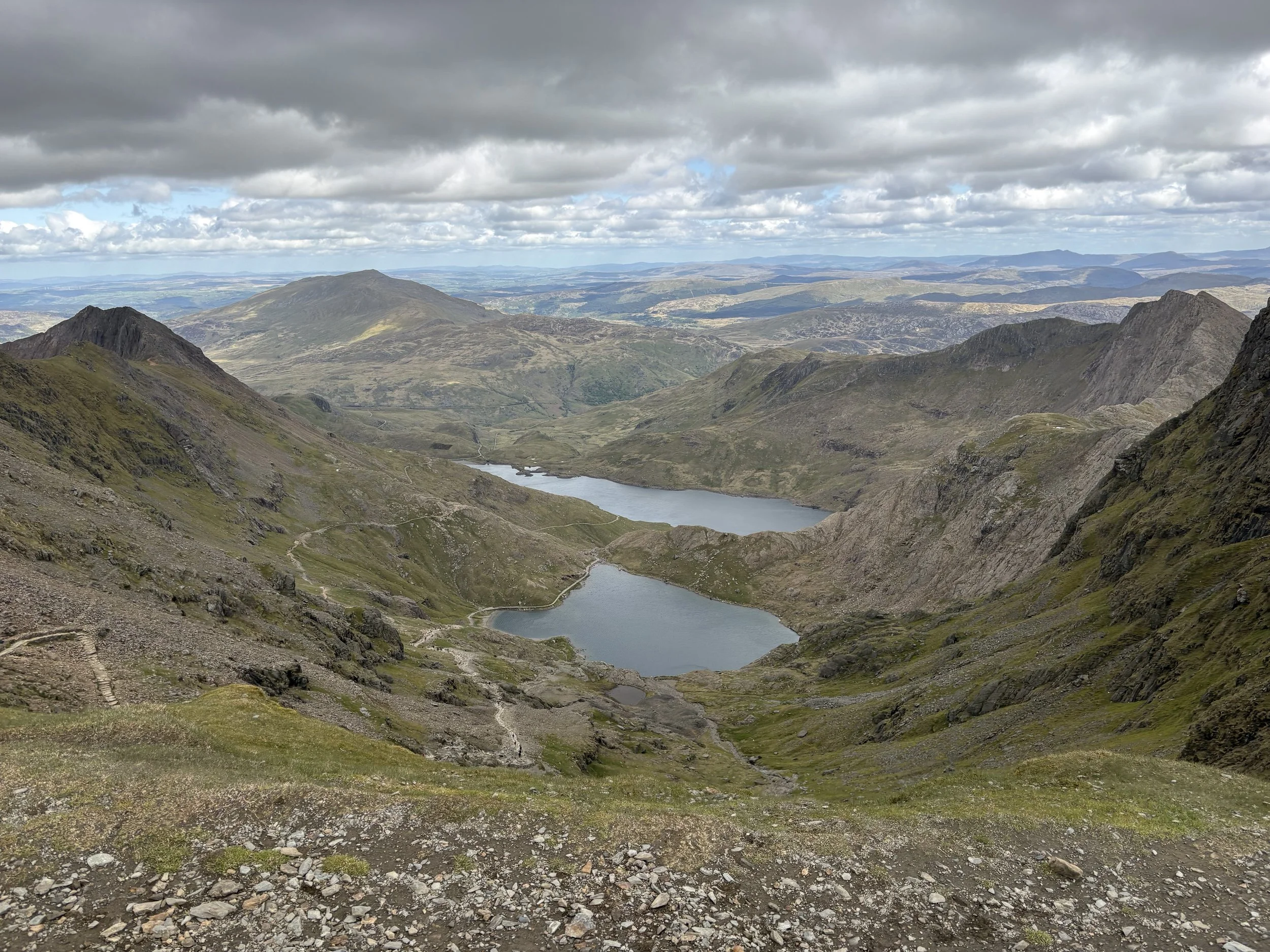
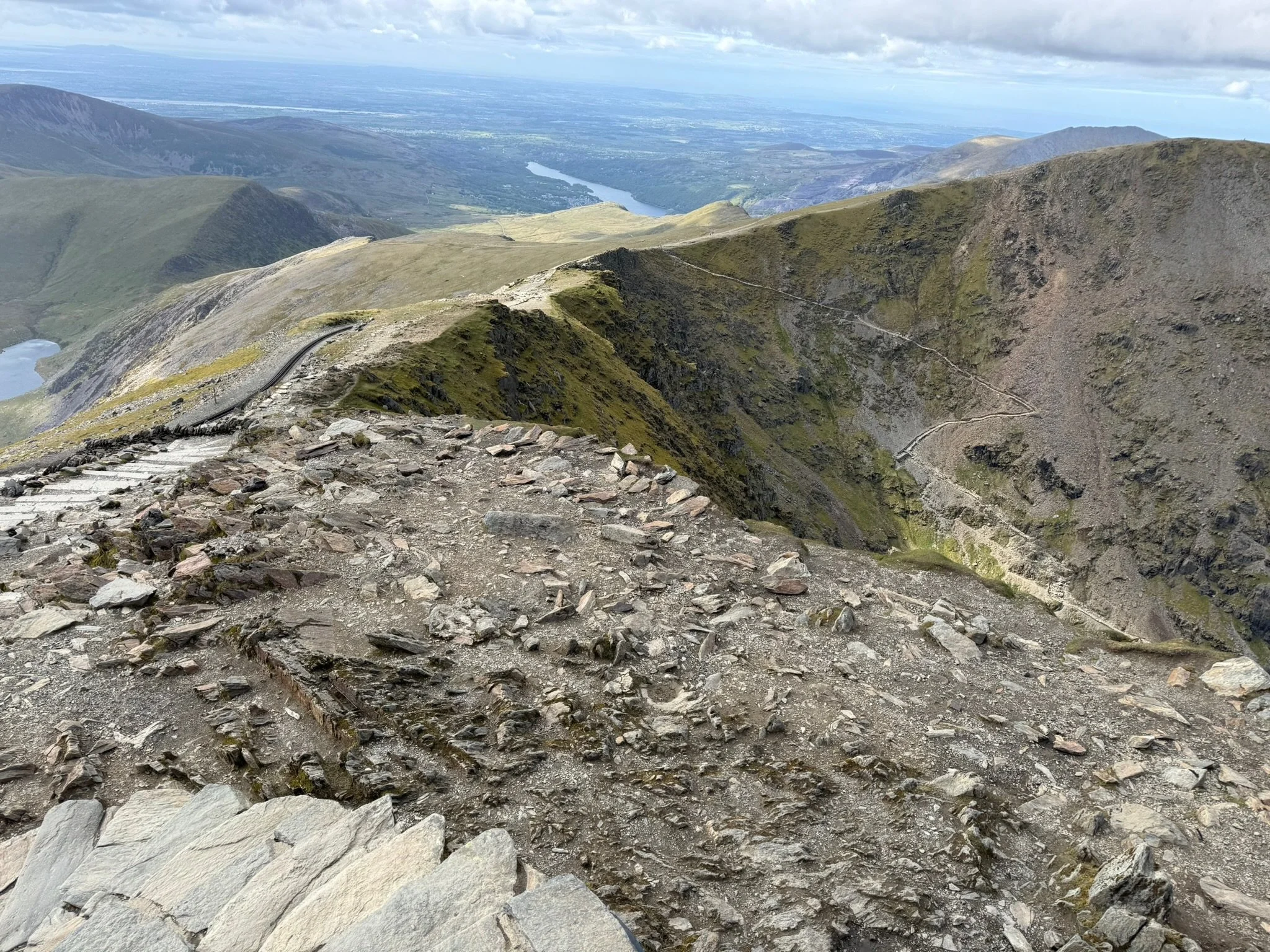
You can see the steep downhill singletrack in the background (Trevor took this pic on his run)
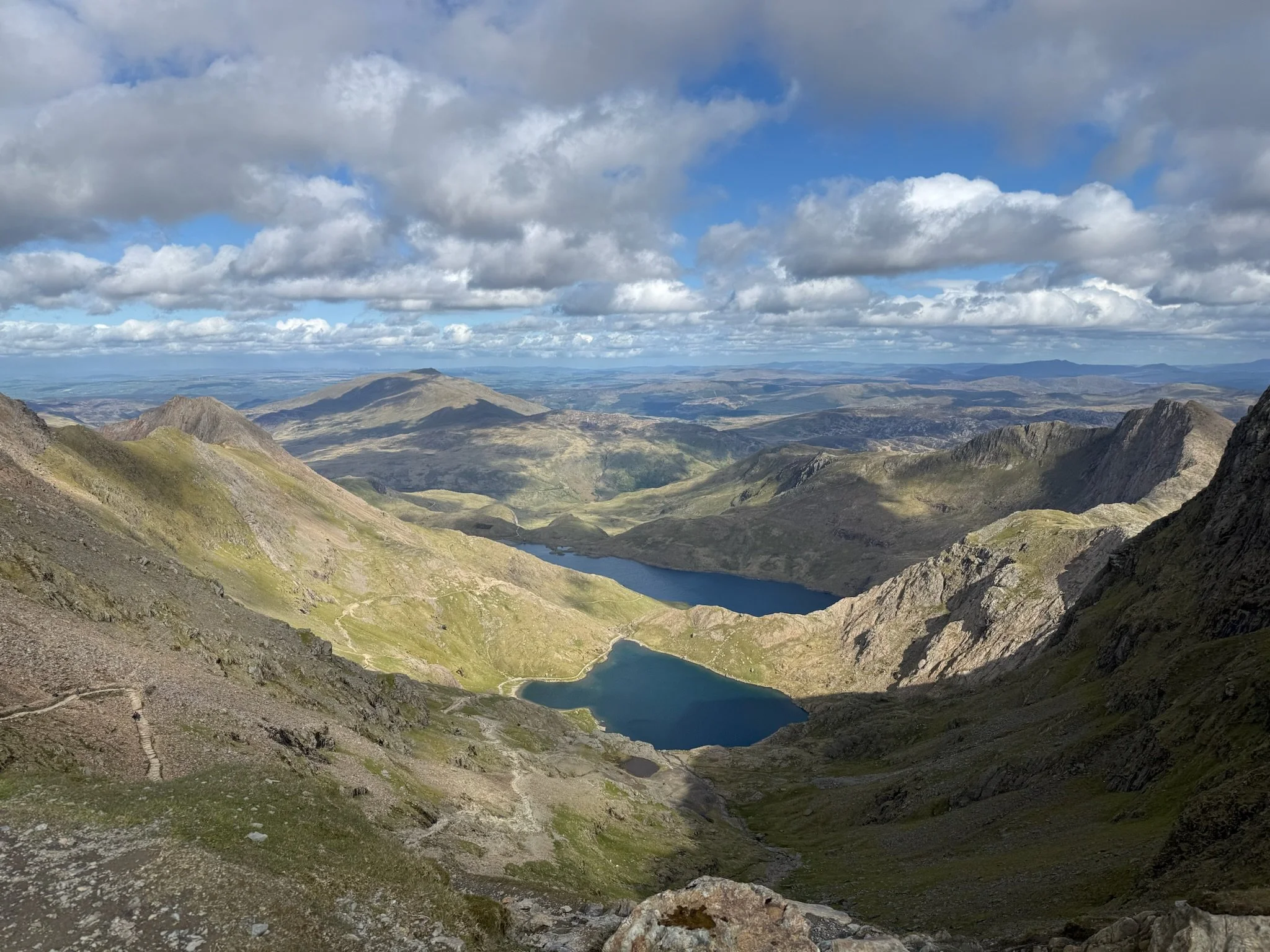
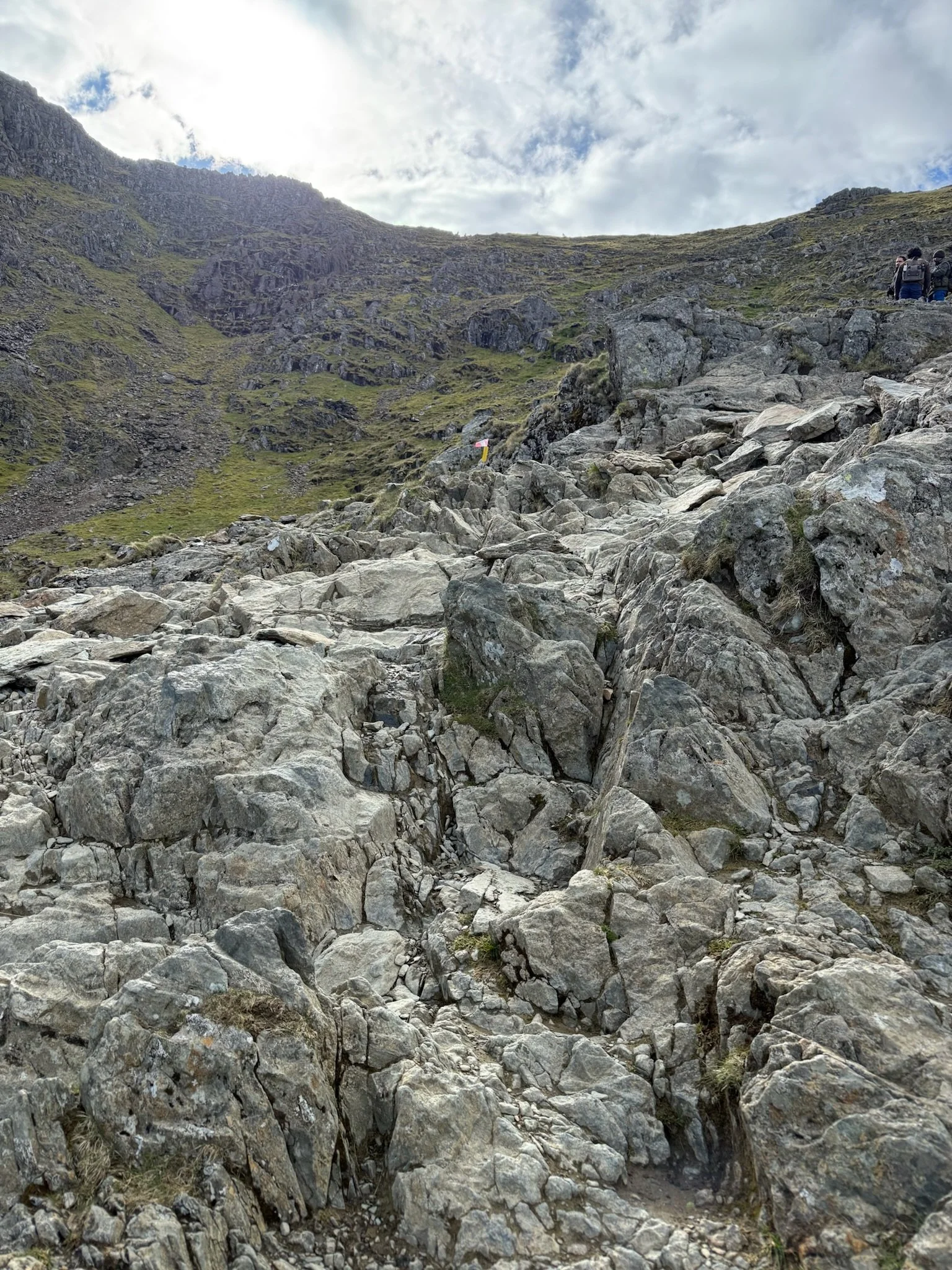
The “trail”. Many sections later in the race were much worse than this.
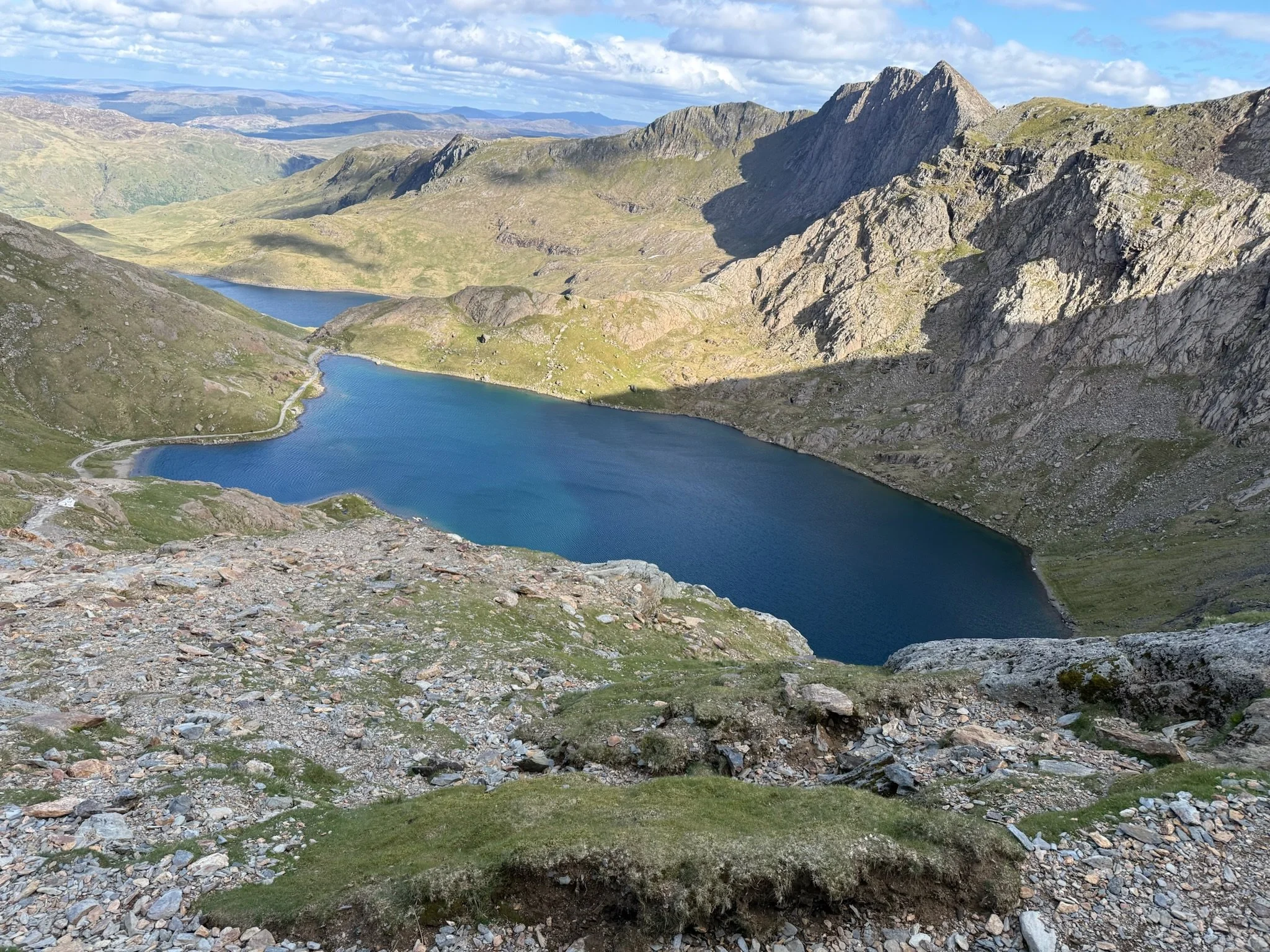
The views didn’t suck though …
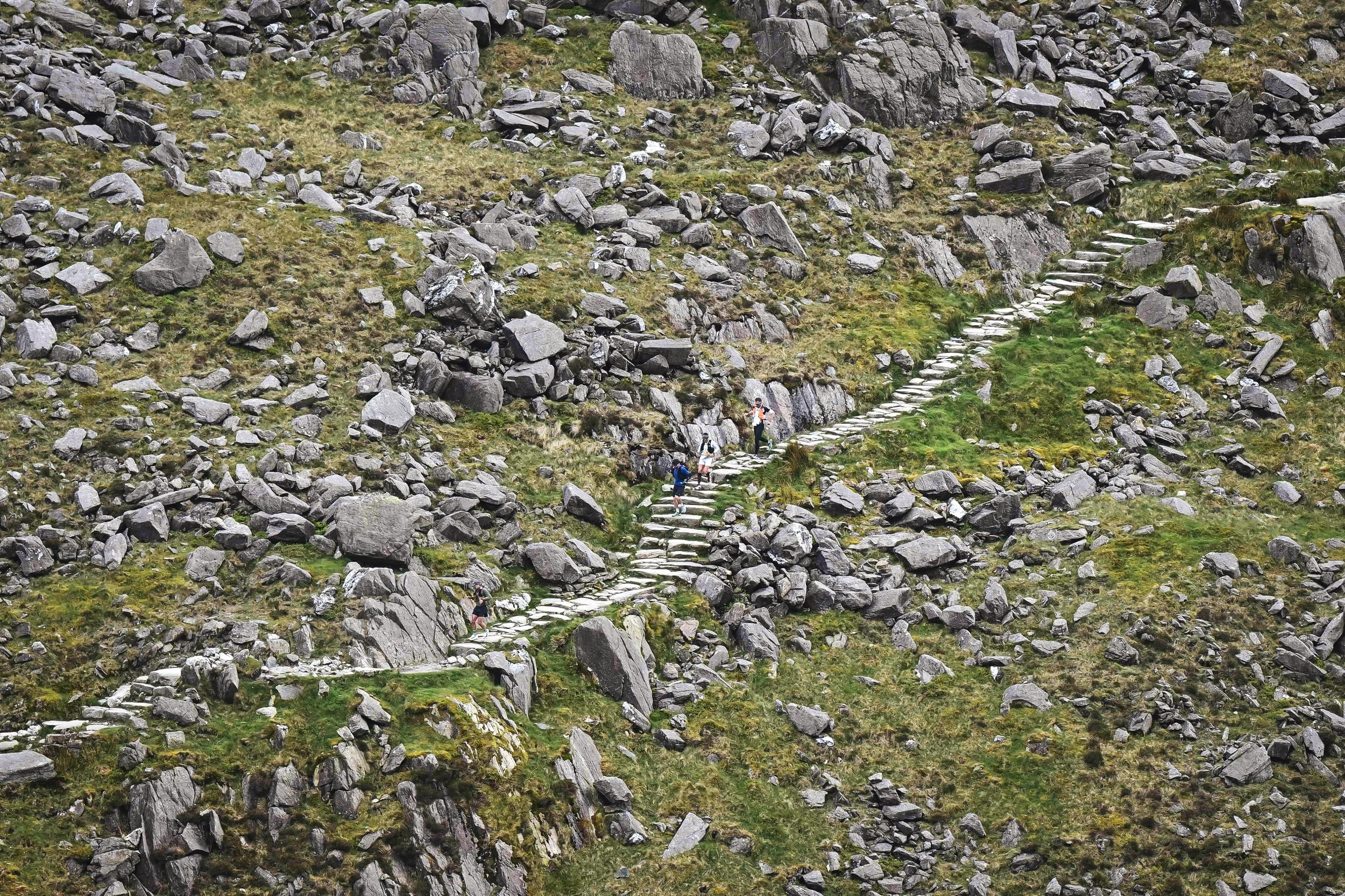
PC UTS 100 on the first descent
The terrain was beautiful with views of lakes on the way down, and despite not feeling up to the task, I was ahead of splits at the first aid station. It was the first and only time that would be the case! It was chilly and windy, and a volunteer remarked how terrible the weather was. It turned out this would actually be the best weather of the whole race.
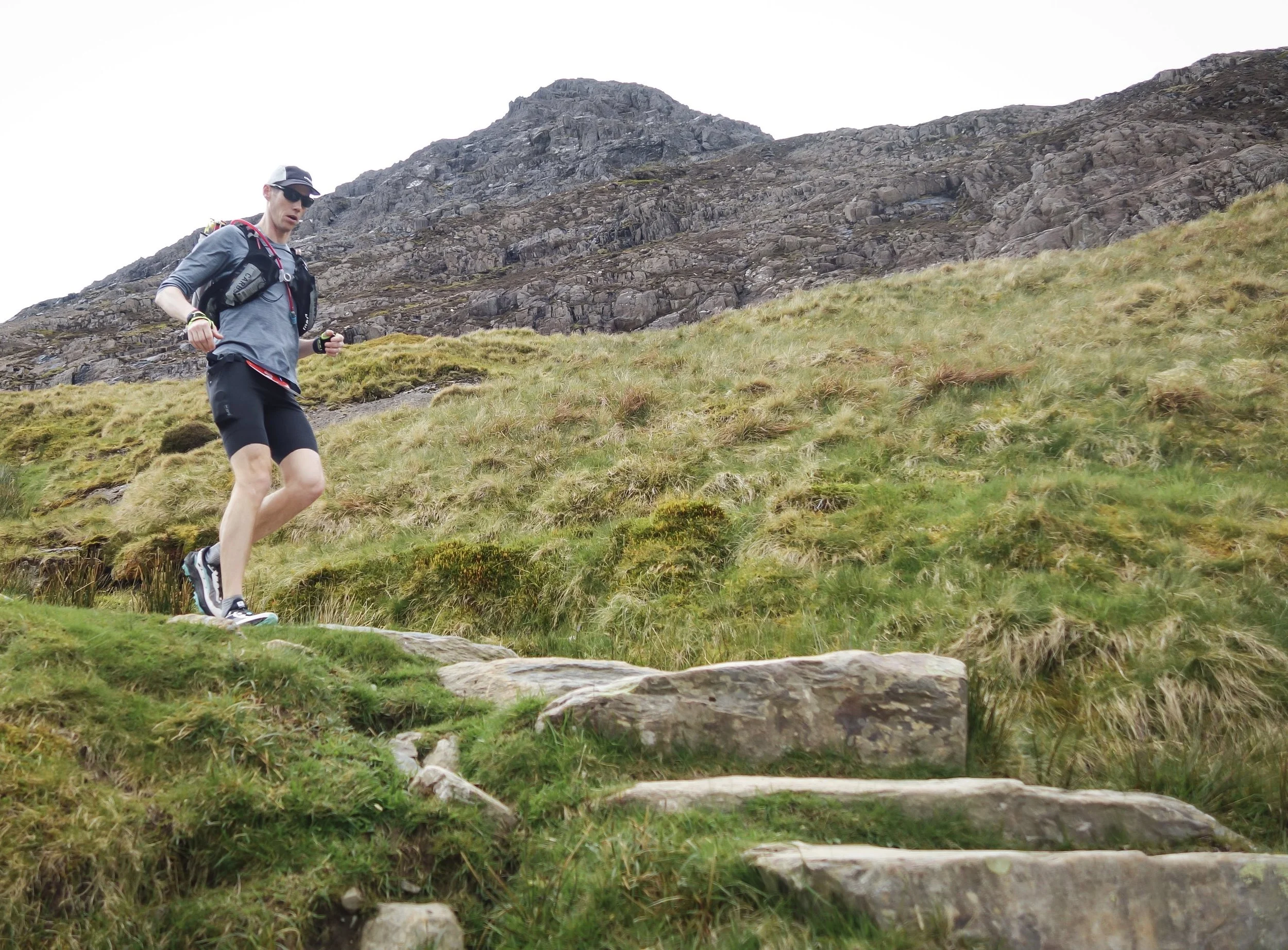
Towards the bottom of the first descent where it got a bit tamer
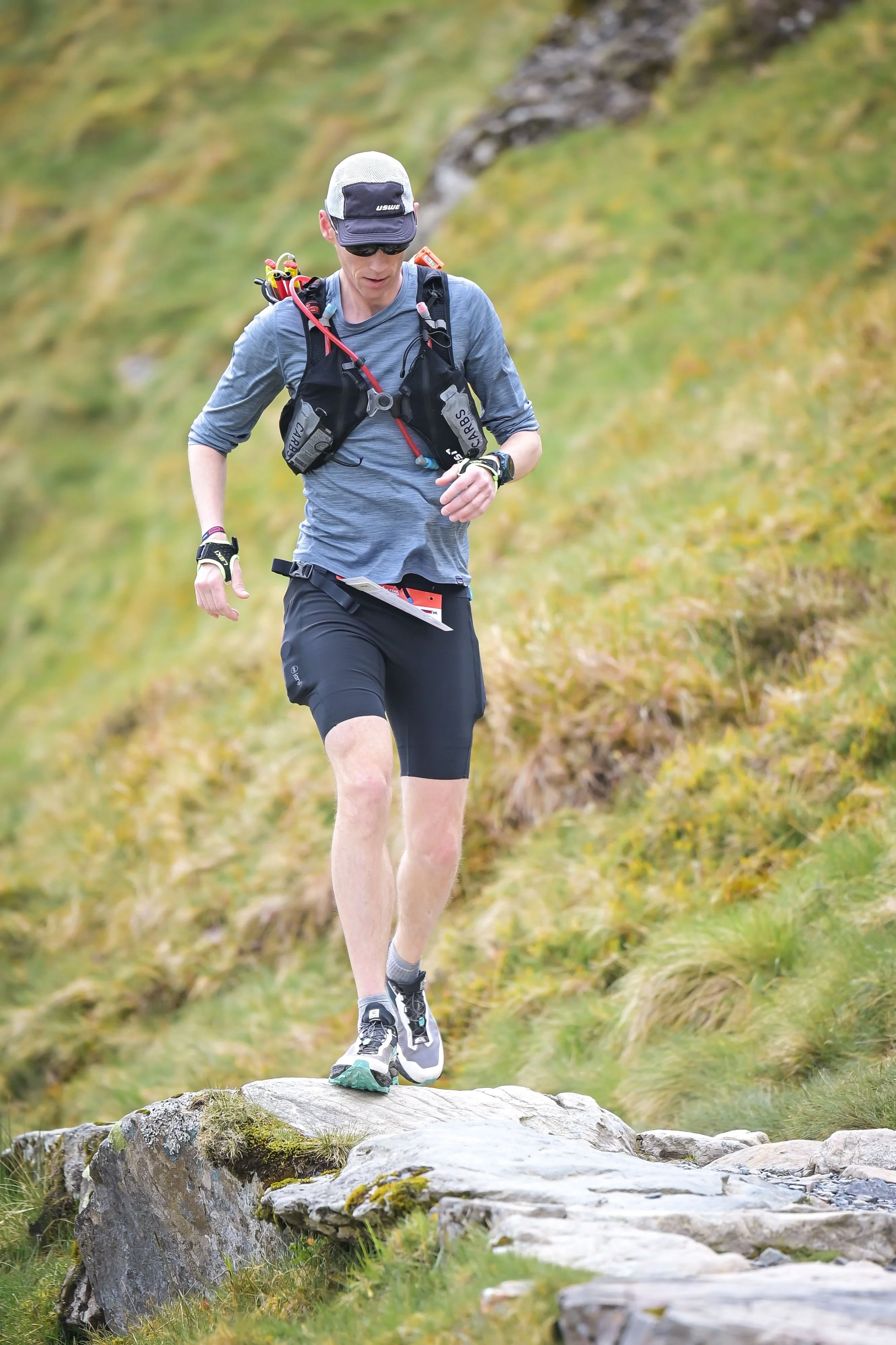
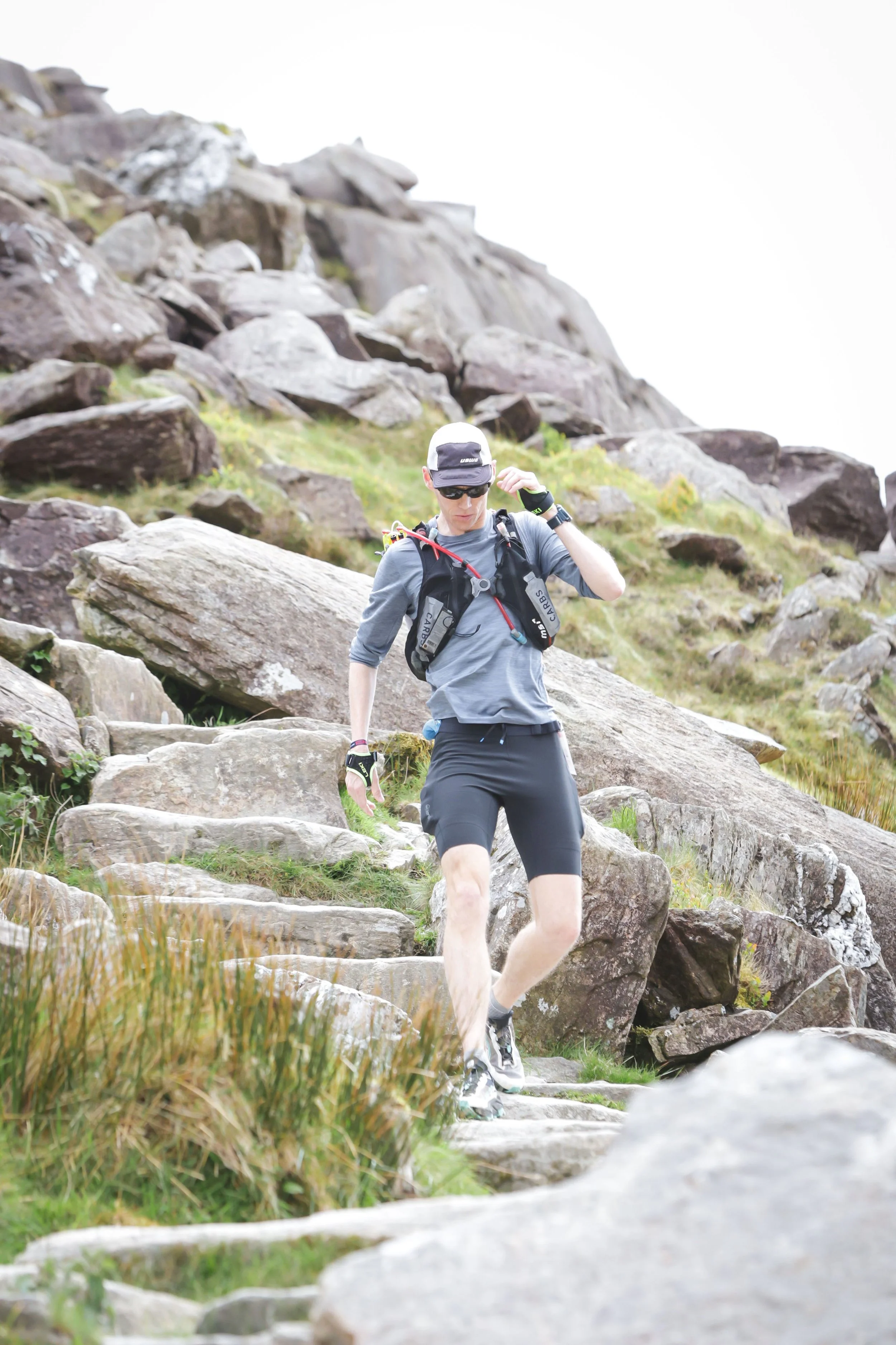
After a tough first section, the next section was even harder. The climb was punishingly steep – around 1300 feet per mile. It was also wet and boggy. I had heard horror stories about the bogs leading into the race and couldn’t quite wrap my mind around it. Imagine what looks like grass, but you sink in to your ankle or calf in wet, cold, muddy bog. I had expected bogs on the rare flat sections where the water would pool, yet somehow this part was boggy at 25% grade. Just terrific.
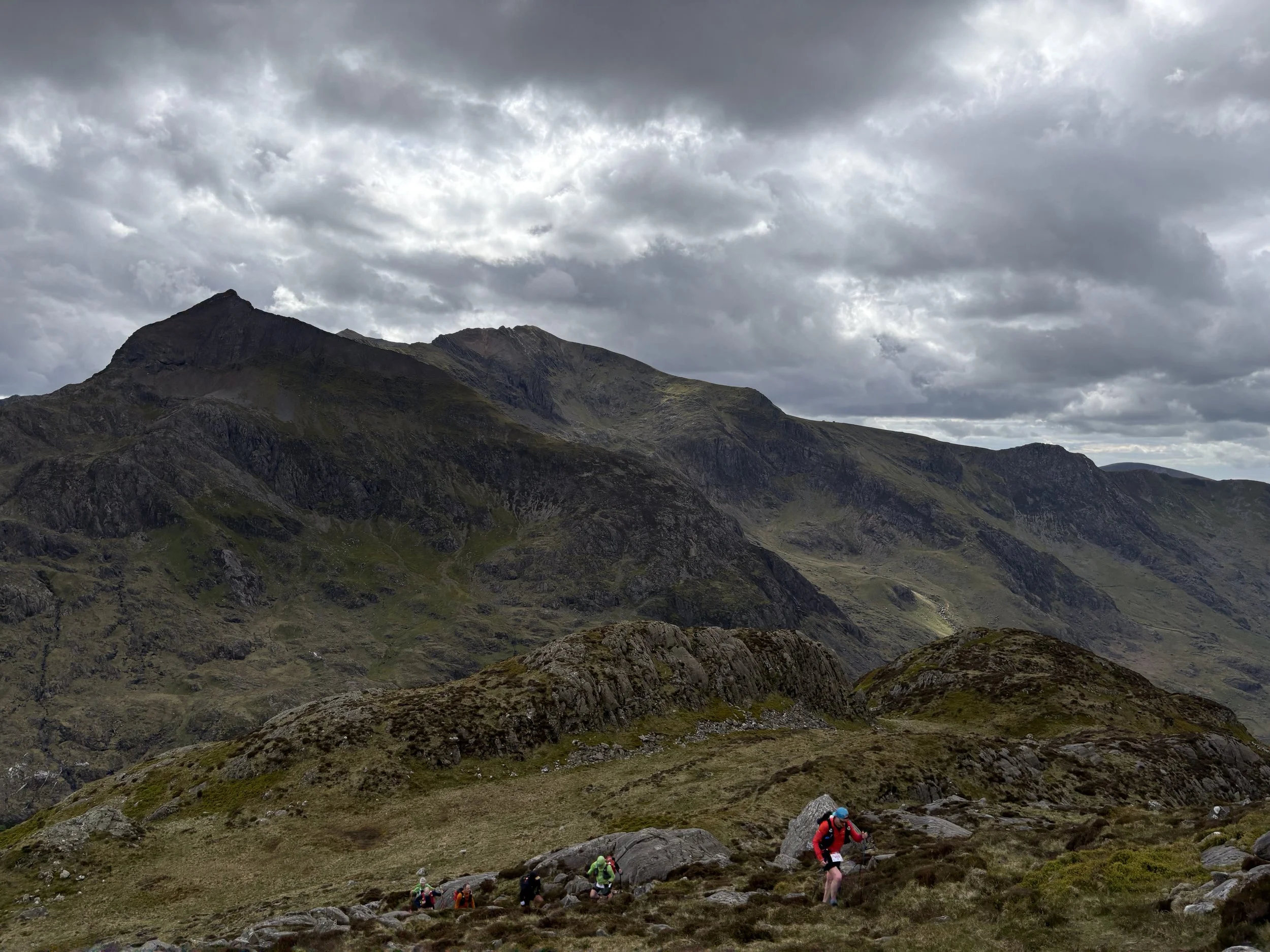
Looking back at Snowdon on the second climb
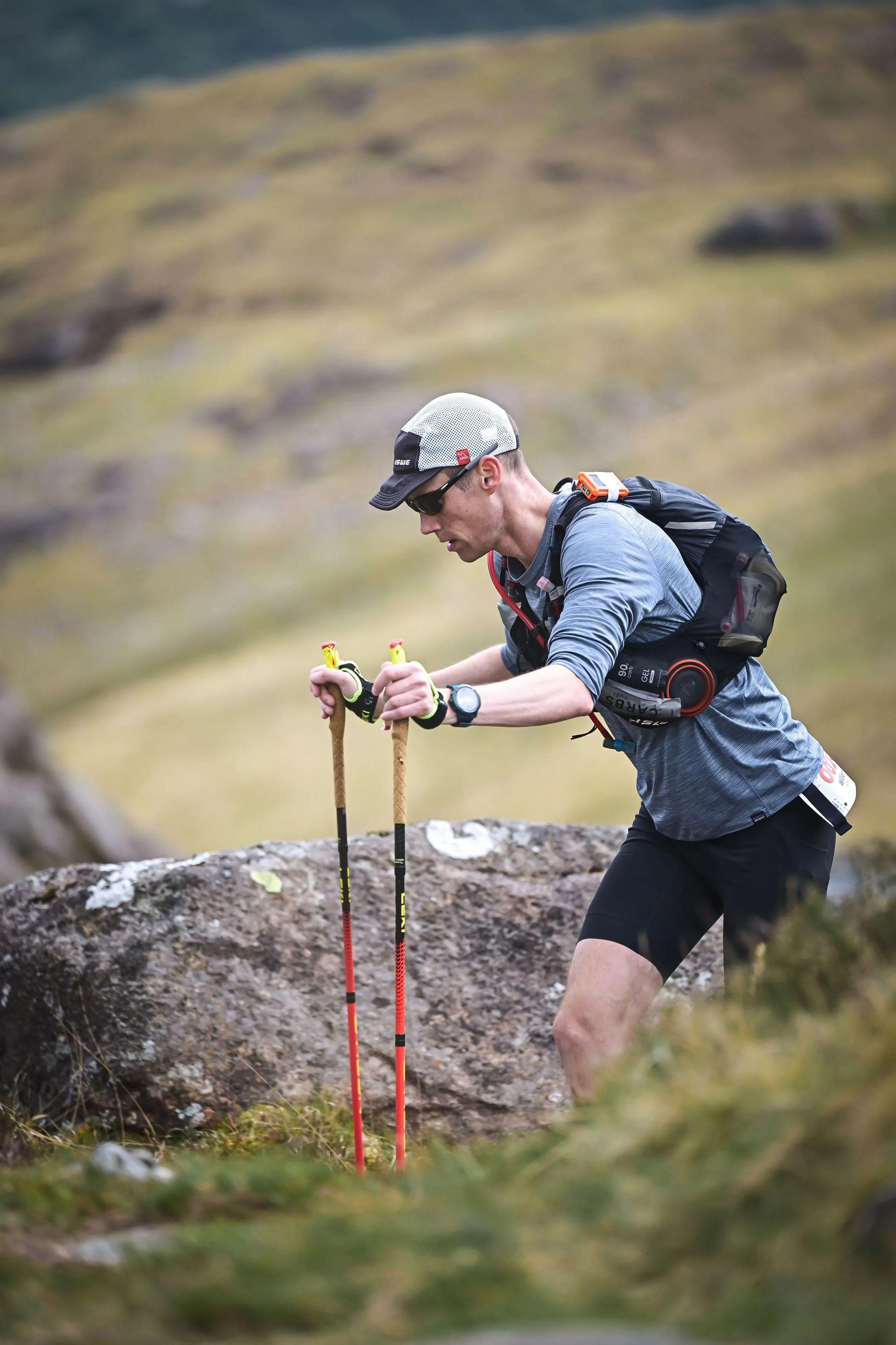
Working hard up the tough second climb
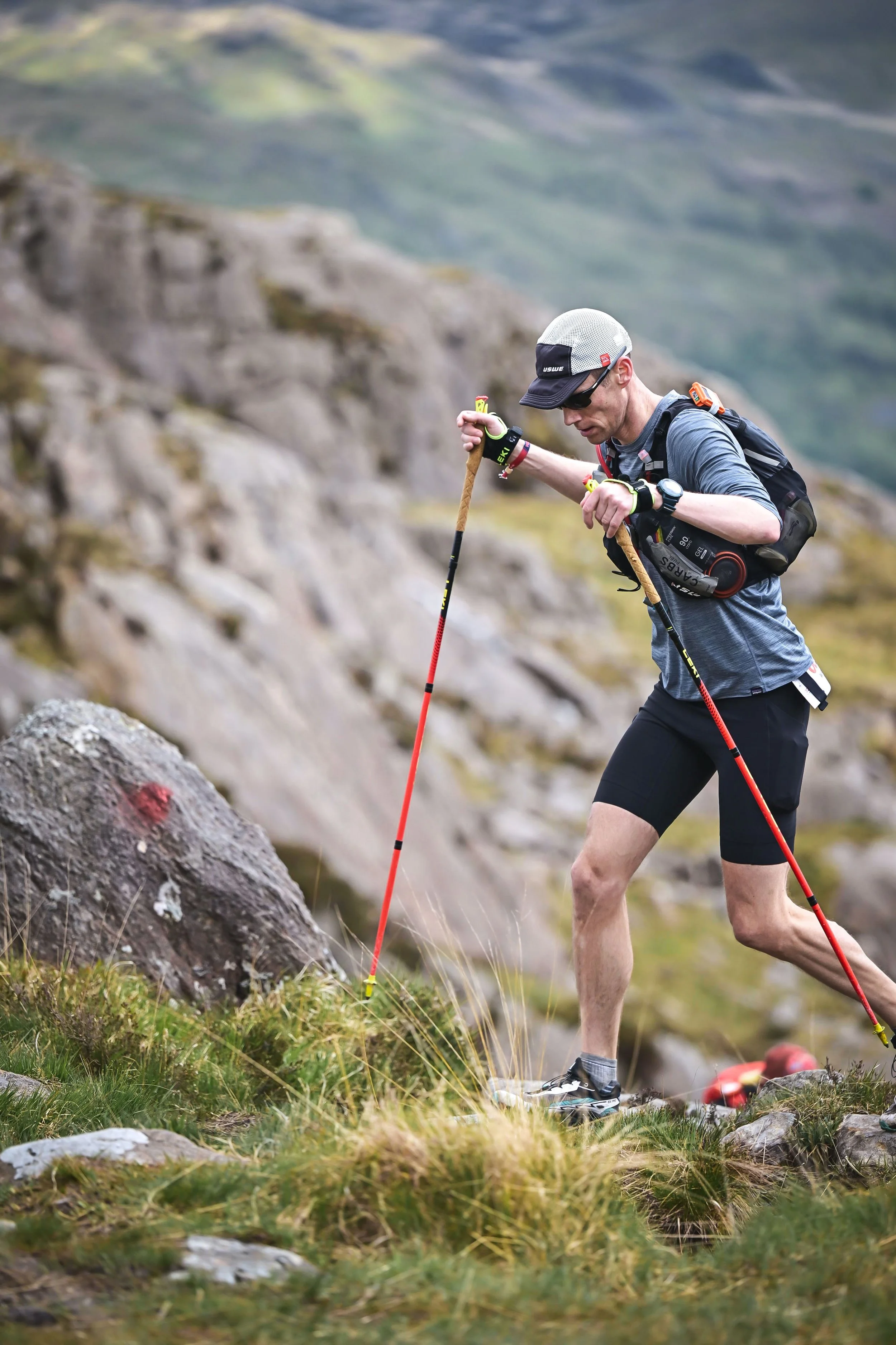
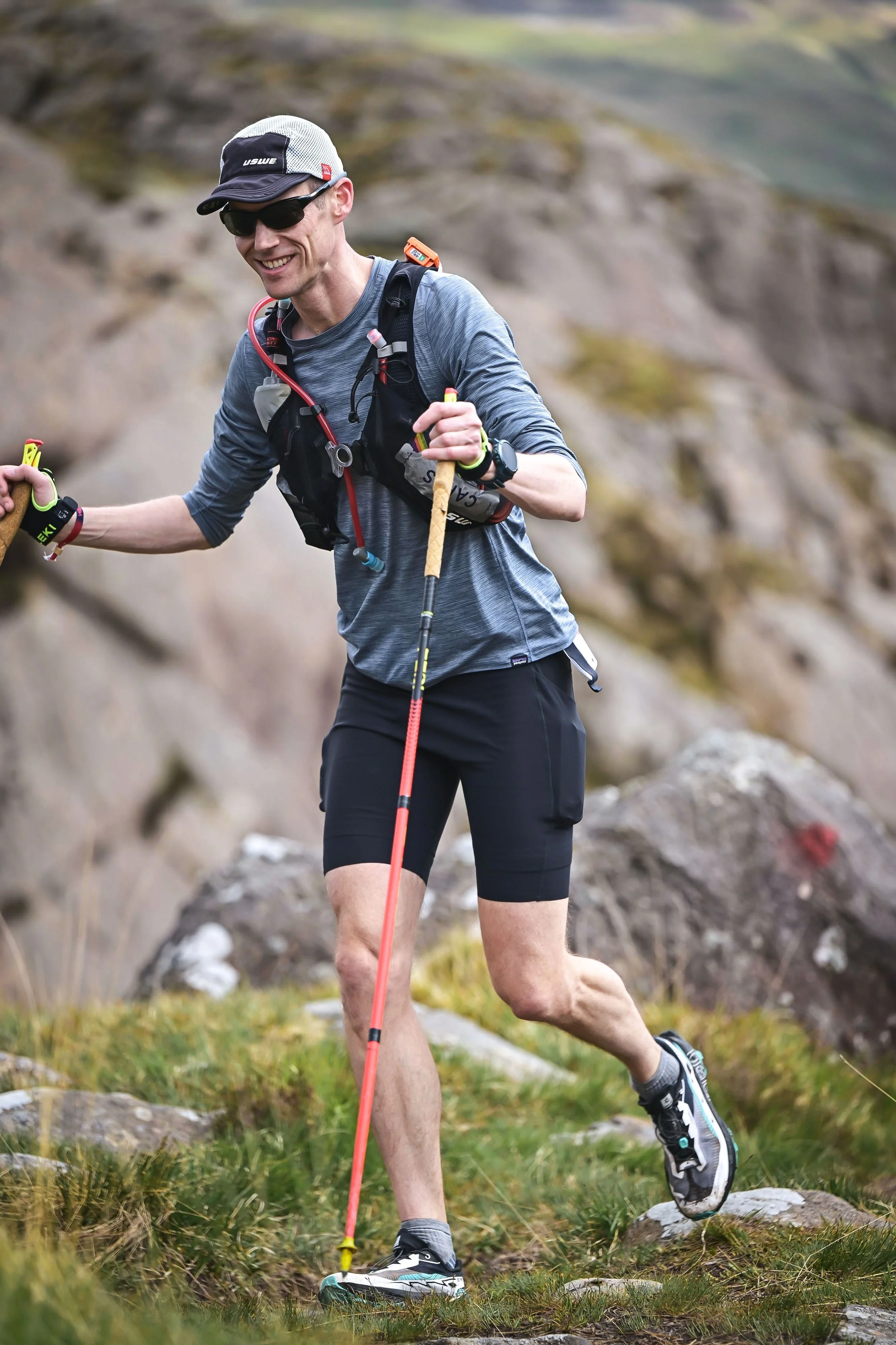
We reached the summit, where it was incredibly windy, probably 30-40mph. I didn’t feel great, and the group I had climbed with quickly went ahead of me. The second descent was tougher and even more technical than the first, and I was getting passed left and right. I was only 12 miles into the race but was already feeling compromised. I haven’t had that experience in a long time, maybe not since the Trail Verbier X-Alpine back in 2015. When I reached the next aid station, I had fallen back to 71st place.
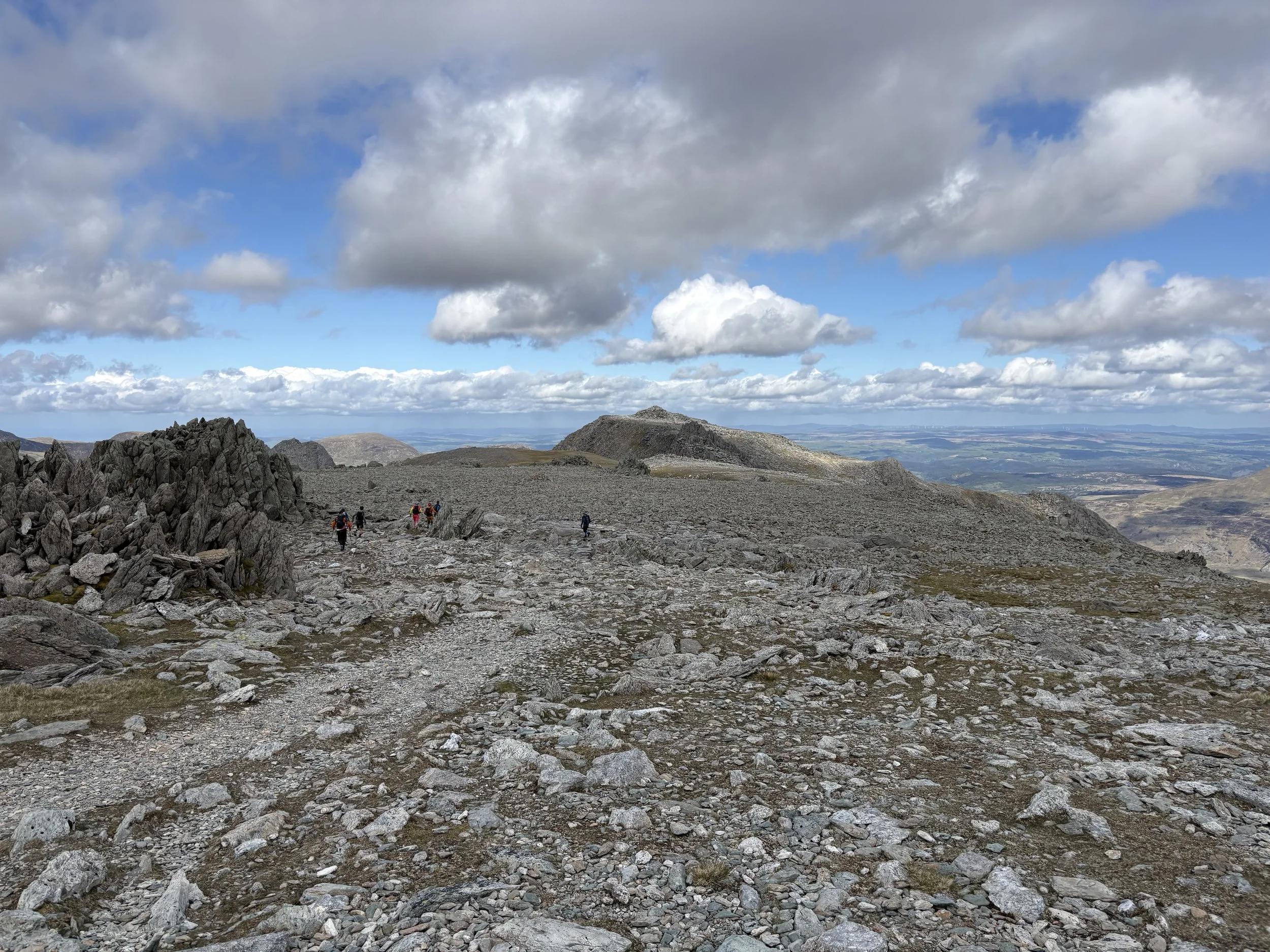
The rocky summit of the second climb
I tried to keep calm and push the negative thoughts out of my head. At the aid station, I refilled bottles and grabbed some chips. We had a short road section before turning up the next monster climb. On top of the other challenges, nutrition was also feeling a bit off now. I felt light-headed and weak going into the huge climb.
After the worst start to a race I could remember, I gave myself a pep talk at the start of the climb. I was a 2x Tor des Geants finish, dammit. I ran sub 100 there. Big mountain races are what I do, and it was time to get to work. While you can’t change the fitness you brought to a race, you can at least change your mindset. I started moving better and fell into a better groove. I caught back up on calories and electrolytes and felt good enough.
This climb was a beast, featuring 1,600 feet per mile with some scrambling. At the top, I could see we would be staying up on the ridge for a while, so I took the time to put on gloves and my jacket. The ridge had more killer views, and the terrain and vistas reminded me an awful lot of Tor. I was in a better headspace and channeling how I feel deep into Tor. You roll with the challenging course, keep eating, take care of yourself, and keep moving as efficiently as you can. Everything else gets pushed out of your head. I opened it up and ran some good miles descending off the ridge, despite the boggy terrain.
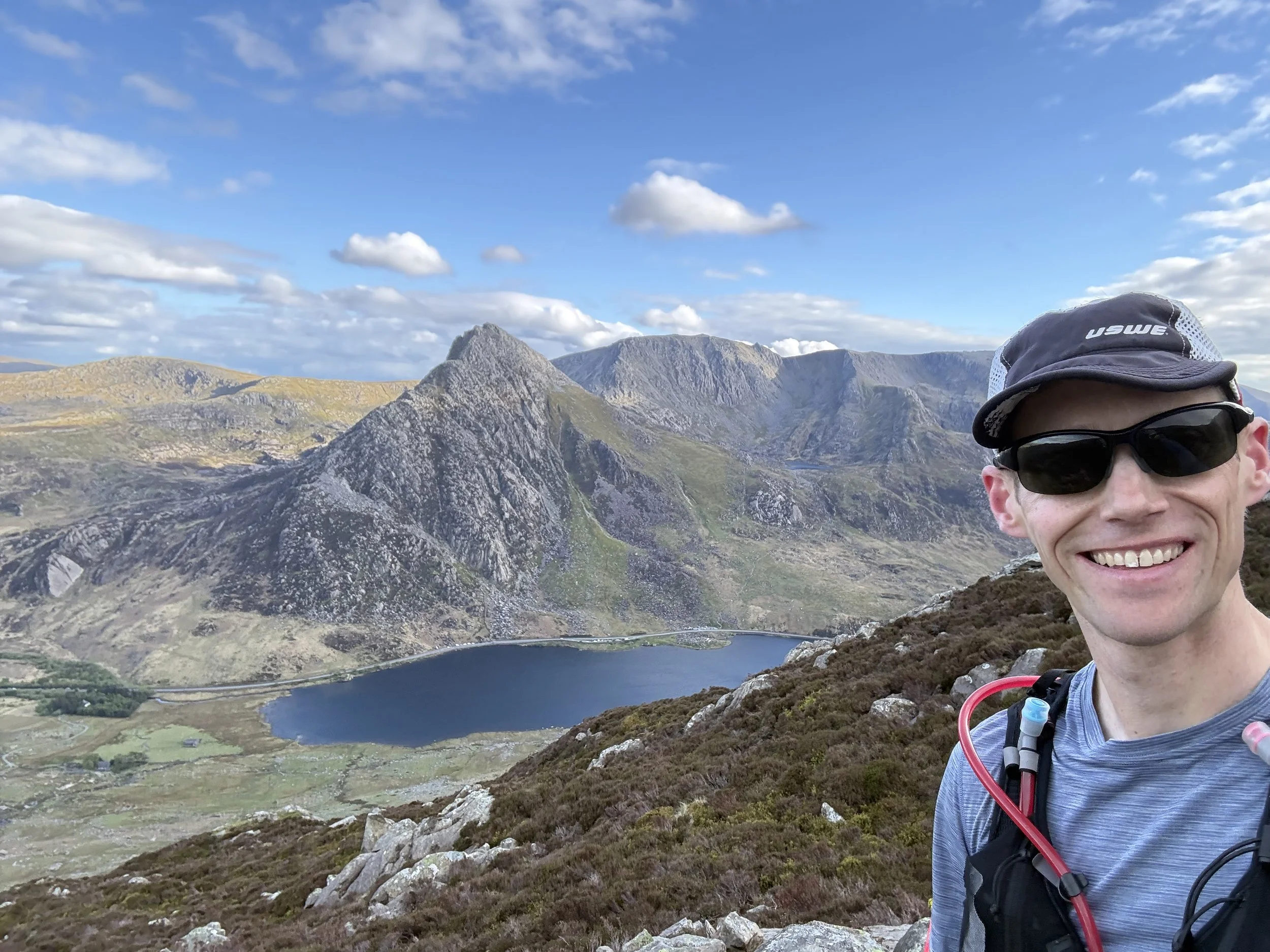
Going up the third climb
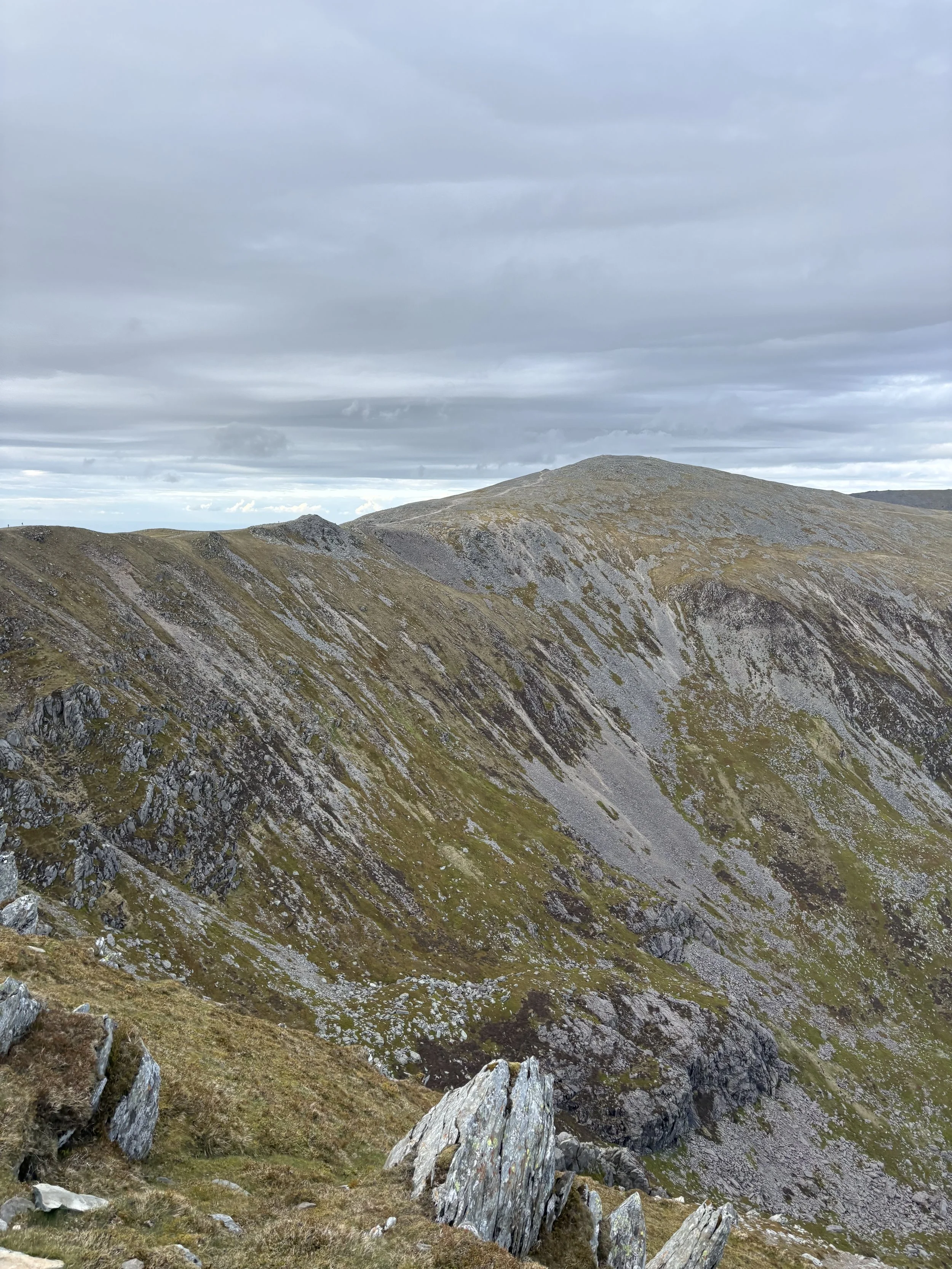
We traversed the ridge in the top left. It was cold and windy up here.
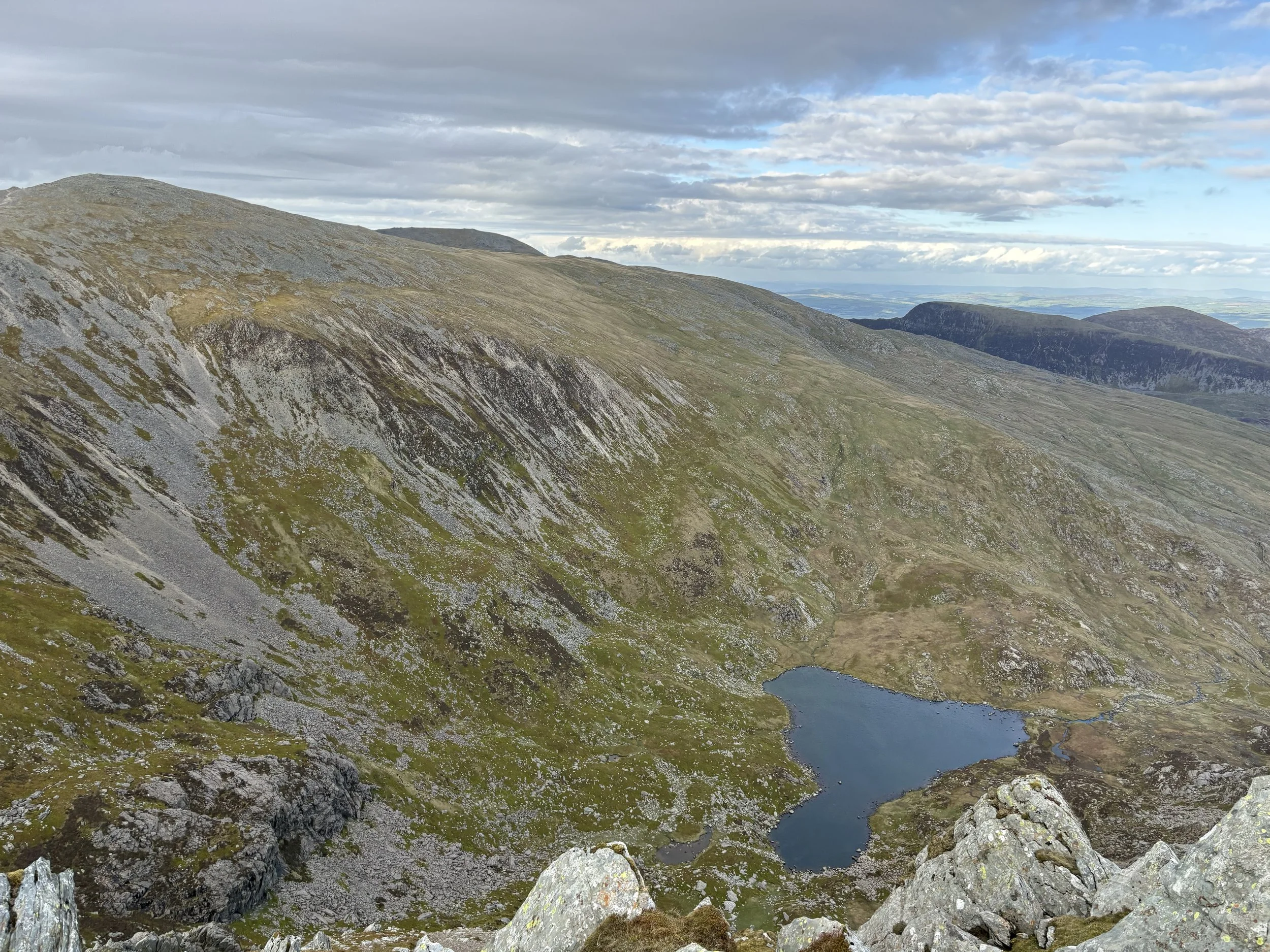
We came up from the bottom right via a steep ridgeline.
I reached the next aid station, Llyn Eigiau, in better spirits. I ate some real food, chugged some Coke, and refilled bottles here. I set off into the early evening, now trying to chase back some of the positions I lost earlier in the race. This was a funky, cross-country section with narrow and overgrown trails, mud, and some tricky navigation. It wasn’t particularly steep, but it was still slow going.
We popped into a rare, forested section as night descended, and I had to put on the headlamp for the first time around 9:30pm. We wound around through and near a town, finally getting to the Capel Curig aid station at 10:20pm. Nutrition continued to be spot on, and I had a good routine at aid stations. Fill bottles, chug Coke, eat food, go.
It was a steep, 2100-foot climb in 2 miles coming out of aid, but it wasn’t overly technical and went well. At the top was a mountain guide who greeted us. At each summit there was at least one mountain guide there for safety. This was a hard job with temps in the 30s / 40s and howling winds on the ridges. It would only get harder later in the race as the storm rolled in. I chatted with one of the guides after the race. They were up there for 12-hour shifts, standing still in those conditions. I couldn’t even fathom how hard that was. He said that he had to extract 3 runners just during his shift.
Each time I came upon a guide during the race, I tried to chat with them, thanking them and telling them what legends they were. This gent told us we had a quite technical ridgeline descent down Moel Siabod – “you might want to put away the poles, lads.” This was Welsh for facemeltingly dangerous, so I braced for impact. I had done the climb near two other runners (Tom and Josh), and we worked together as a team. We picked our way down a steep boulder field, crab-walking through some scrambling downclimbs. Route finding was tricky in the dark, so it was helpful to have a team.
We finally spilled out on a forest road. Wow, that was nuts. I chatted a bit more with Tom and Josh but soon found myself pulling ahead on the rare runnable section. I was beyond excited to see Trevor for the first time after ten and half hours of racing. I had slowly and steadily moved up to 52nd place.
I told him how crazy the course had been and that splits were out the window. It was a quick transition here. I would see him in 7.5 miles, so we opted not to change shoes or socks here. I ate chips, chugged Coke, and I was on my way with a refilled pack.
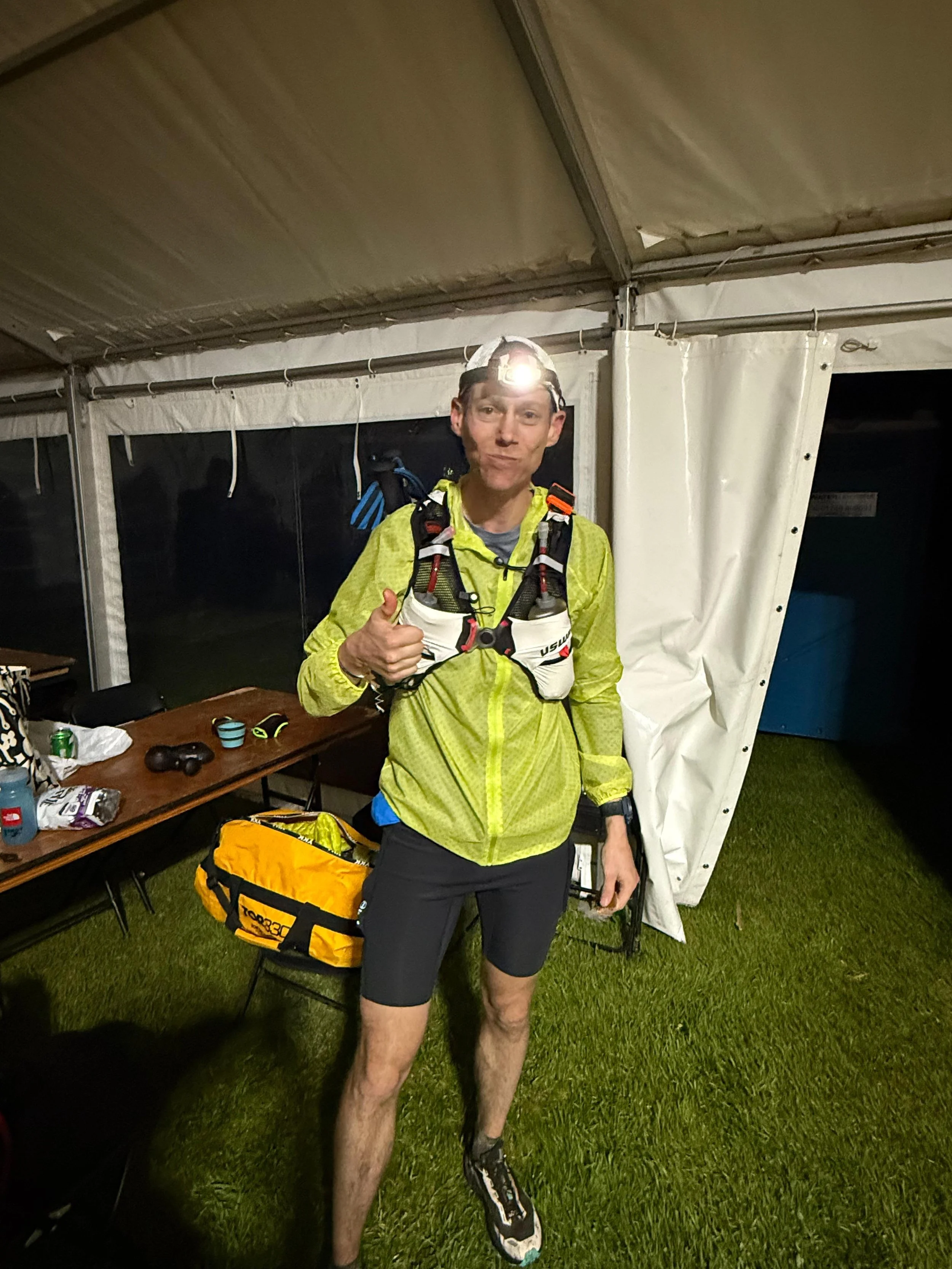
Happy to see Trevor and taking down calories like it was my job!
Dolwyddelan to Beddgelert: Miles 36.5 to 69.6
We had a long climb up from the aid station, but it was a good one. It was mostly double track and dry, so I actually made good time. Then we stayed up on the ridge, which was extremely wet and boggy. That slowed me down on what should have been more runnable, but I was still able to move well compared to most of the course.
The last part of the descent was steep and tricky. A guy ran by me, and I told him how great he was moving. He reported that he was out of it and hallucinating. I wished him well and hoped he’d be ok. I met Trevor at the aid station and starting housing some food. My appetite was great for most of the race aside from the bobble early on. With the course being so tough, I was burning hot and needed a lot of fuel. I took a bit longer here to change shoes from Kailas Pro to the Kailas EX 330.
I’ve been searching forever for a high performing shoe that can stand up to courses like UTS and Tor, and the Kailas shoes delivered. They have serious traction with Vibram megagrip and some great, responsive foam. I love the speedlace system, similar to my trusty Salomon Speedcross. The EX 330 shoe was made specifically for Tor des Geants with input from Franco Colle. I had just gotten them and only ran four miles in the shoes before the race. I’d end up putting the last 57 miles on them. So much for not trying anything new on race day! I ran 33 hours with constantly wet feet, only one shoe and sock change, and no blisters or foot issues. We’ll call it a success.
Trevor had crushed the crew stop again, and the poor guy had a 2-hour drive in the mountains from 2-4am on the left side of the road to get back to the Airbnb. What a champ!
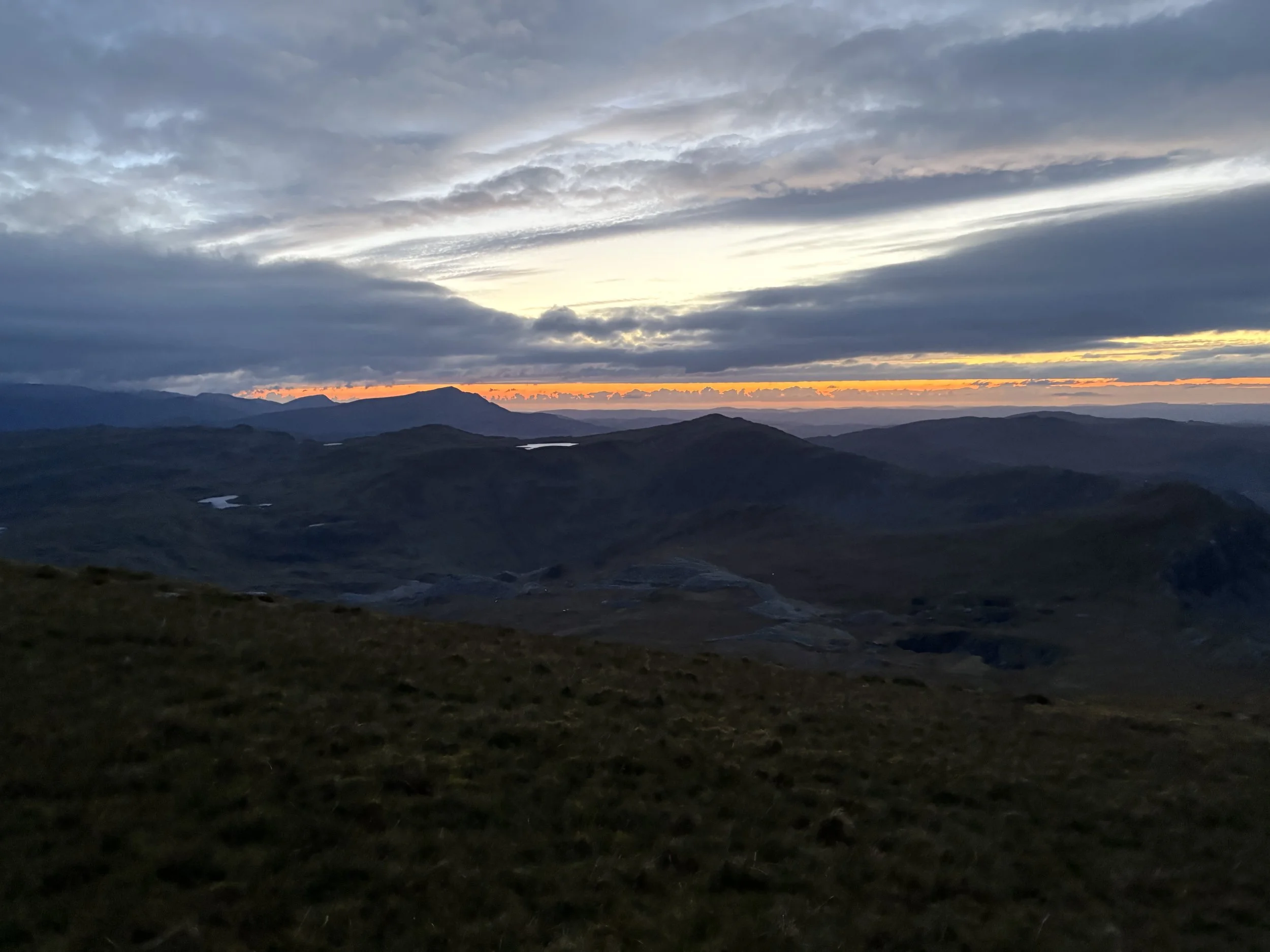
This next ascent and descent was very Tor-like again. The long climb got very steep at the top with some scrambling. First light hit a bit before 4am, and I crested the summit just as dawn was hitting, which made for unique and stunning views of the surrounding mountains and lake. I said hello to the cheery mountain guide, who told me it was a nice descent to the aid station. That meant only 1,100 feet per mile on mostly grassy terrain – positively delightful.
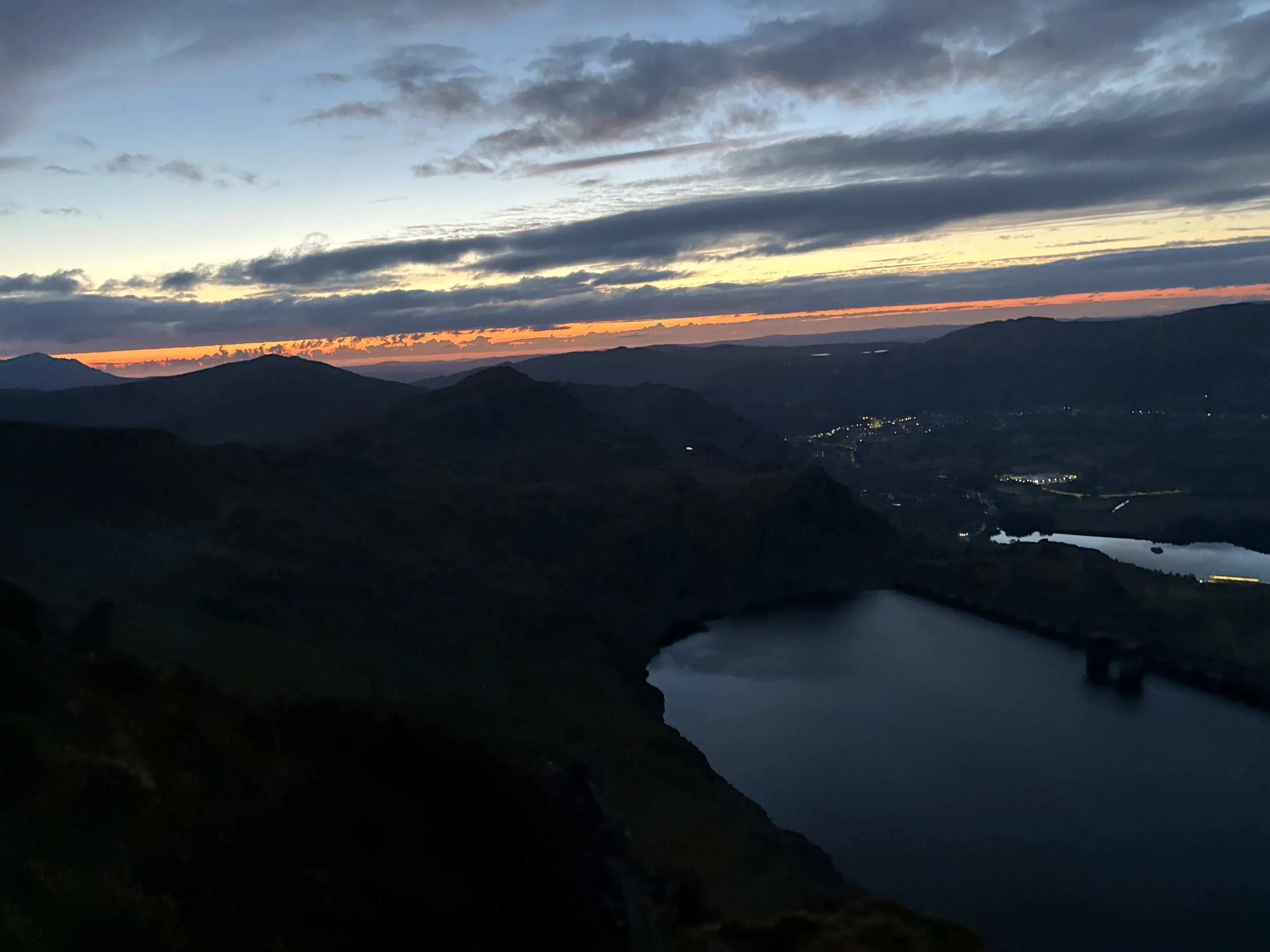
Early dawn in Wales
This aid station was the only drop bag location. I resupplied my gels and bottles while the wonderful volunteers brought me hot rice pudding. This would have been a nice place to hang out, but I had work to do.
I enjoyed much of the next big climb, but the steep scrambling at the top was starting to get harder. There was no changing that my legs weren’t seasoned to this kind of terrain. The next section looked mild on paper with some rolling terrain followed by a descent, but it nearly broke me.
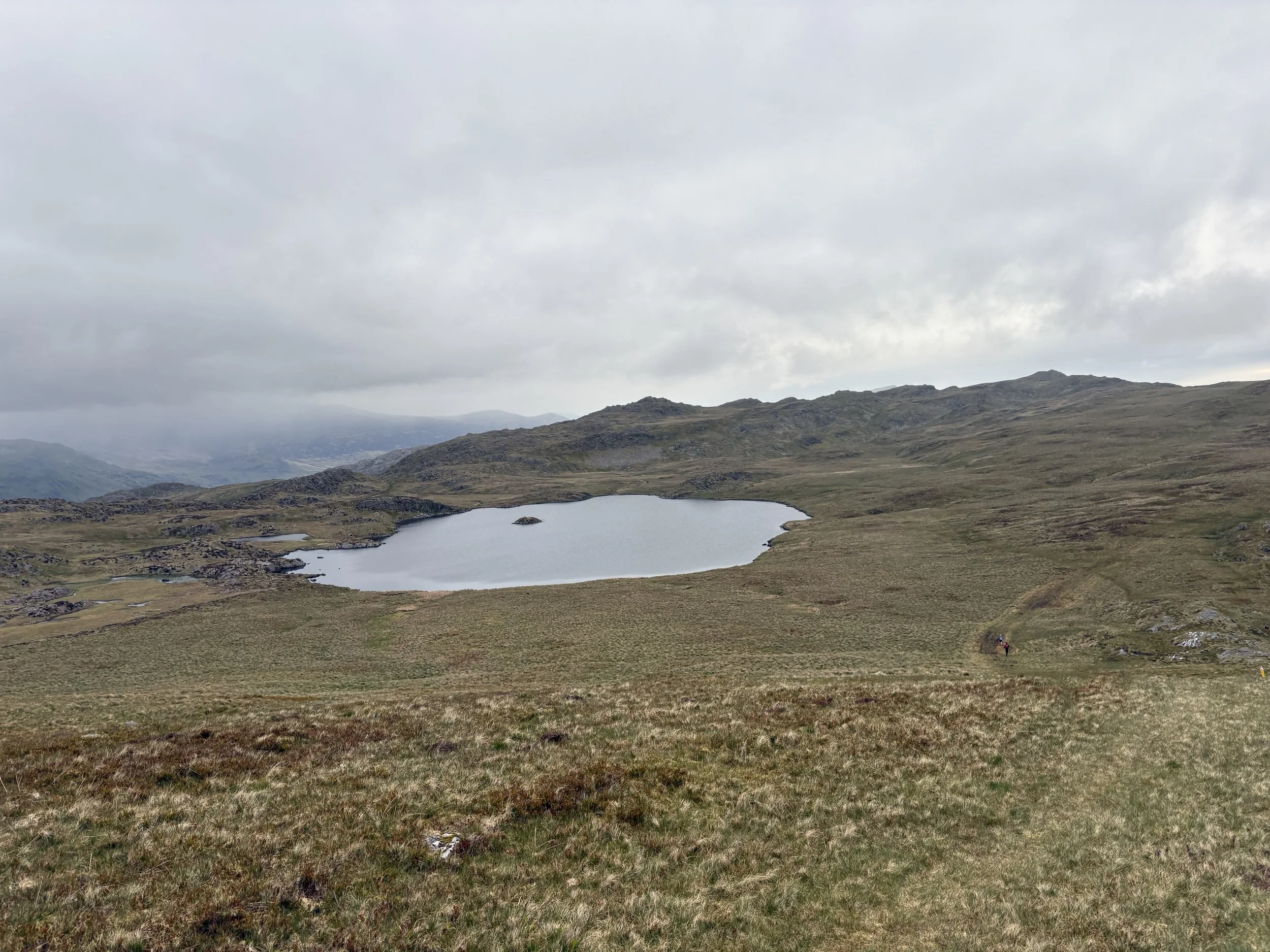
Sure, it looks fine. But the bogs are everywhere!
Much of the next 4-5 miles were boggy with ankle and shin deep water and muck. Navigation was tricky in spots as there wasn’t really a trail and course markings were slim. For a flatter section, there was minimal running to be had. It was also cold, cloudy, and starting to rain.
A few bog crossings got worse, and I sank up to my knees. My feet felt like bricks as my shoes and socks were saturated with water and mud. I came to a bog and tried to pick the best line. My left leg sank into the bog. And sank. And sank. I panicked, wondering when or if I would stop sinking. I ended up waist deep in the monstrosity and tried not to panic. There really isn’t anything solid to push on, so it took a huge effort to get myself out. A short while later this happened AGAIN, and I found myself waist deep and questioning all my life decisions. I was soaking wet and very unhappy. I slowed even more to try to pick my line and managed to only go calf deep into the remaining bogs.
We finally turned left for a steep descent down to the aid station. It was muddy, challenging, and slow, but at least the bogs were over for now. I came upon another runner and asked if he got stuck in the bog back there. He was from Wales and laughed. “So many times,” he said.
I was in dire need of the approaching aid station. I needed the bathroom. I needed food. My race bib was falling off. I was soaking wet and caked in mud and muck from the waist down. Most of all, I think I just needed a hug. Then after hours of remote wilderness, I suddenly merged in with the 100k field just before the aid station. They were at the start of the race, merrily running along on fresh legs, laughing and smiling. I, on the other hand, looked like I had seen a ghost and wanted to murder a rock.
I had expected a quiet aid station and planned to take a longer stop to sort myself out. Instead it was me and about 50 of the 100k runners flitting about. It was overwhelming, so I decided to leave. The next section looked relatively tame. I meandered through muddy trails in the woods, going slower than I should.
Suddenly I was getting veeerrrrry tired. It was around 8am, which was 3am back home. I couldn’t keep my eyes open and debated a dirt nap. While it was tempting, I knew that a nap on the wet, cold ground wouldn’t really do me much good. I had a caffeine pill and a gel, forcing myself to keep moving
The chap from Wales came up and quickly passed me. While I felt terrible, I knew that this was the moment to latch onto him and snap myself out of my funk. I struck up a conversation, and he was an incredibly nice guy. We spilled onto a nice gravel path as he told me about the course and what to expect.
Just like that I was running 10-minute miles and feeling fine. We came to the next climb, which my new buddy said wasn’t too bad. He did warn me though that the following climb would be a monster. Wonderful.
I was climbing well and quickly on my own again. I called Trevor to complain about the bogs. I’m sure he was wondering why on earth I called to tell him this, but I just needed to get it out, and he was a good sport. The climb was over quickly, but descents were getting more painful. My quads and feet were feeling the toll of the terrain. We bottomed out on a very rocky trail along the bank of a river. I was beyond ready to see Trevor and get some food after the horrors of the last section.
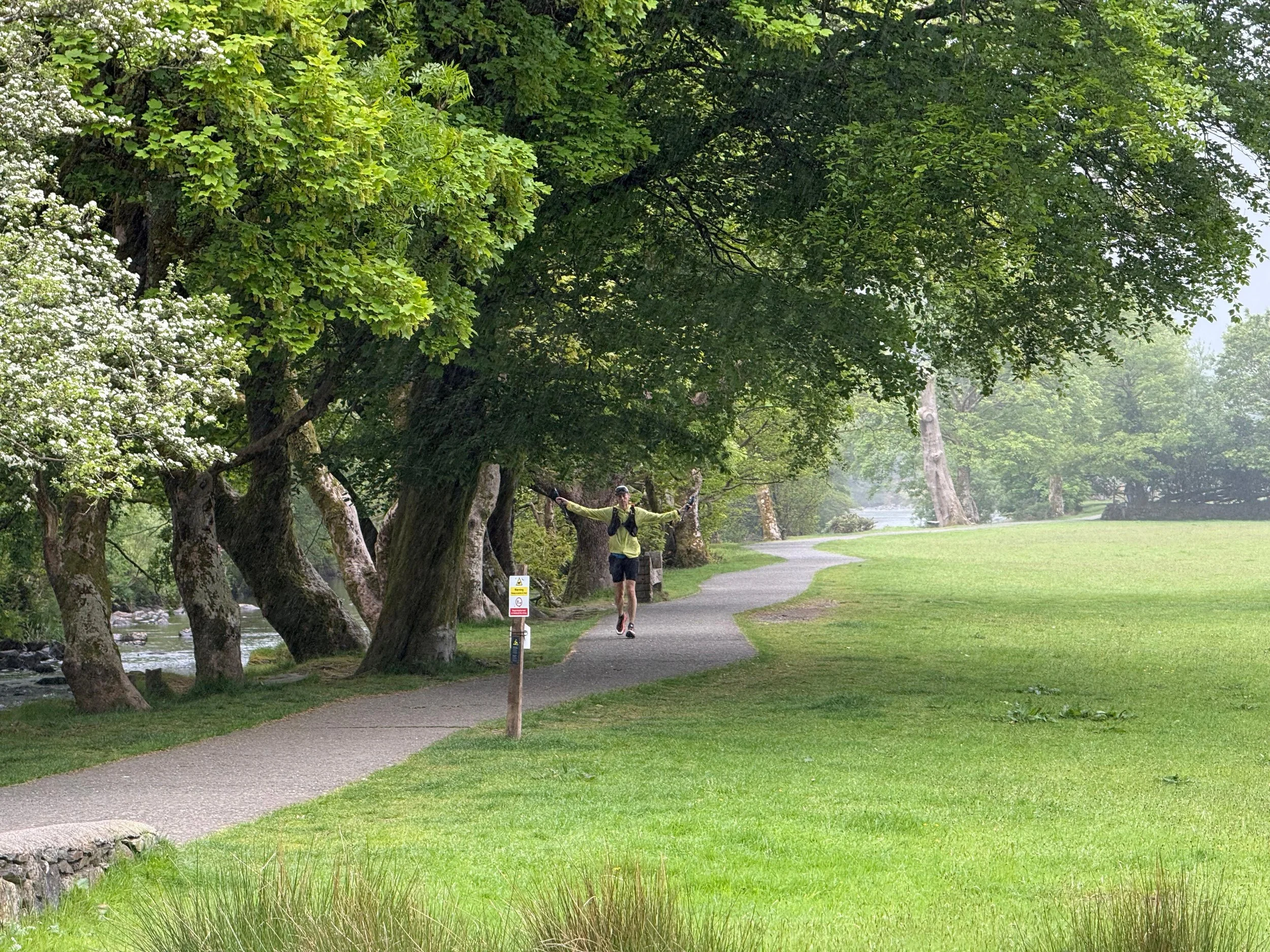
So happy to see Trevor!
Finally, we left the stream and joined a footpath towards the little town of Beddgelert. As I got close Trevor was there to cheer, which did worlds to lift my spirits. I quickly started complaining again about the bogs and how terrible they were. “Waist deep, Trevor. WAIST. DEEP!!!!”
We set to work at the aid station changing out my pack. Trevor found me a bowl of hot pasta, which was just amazing. We decided not to change my shoes or socks – it was just too wet out there. I ate a bunch more food and set out to what I would soon discover to be the hardest section of the course.
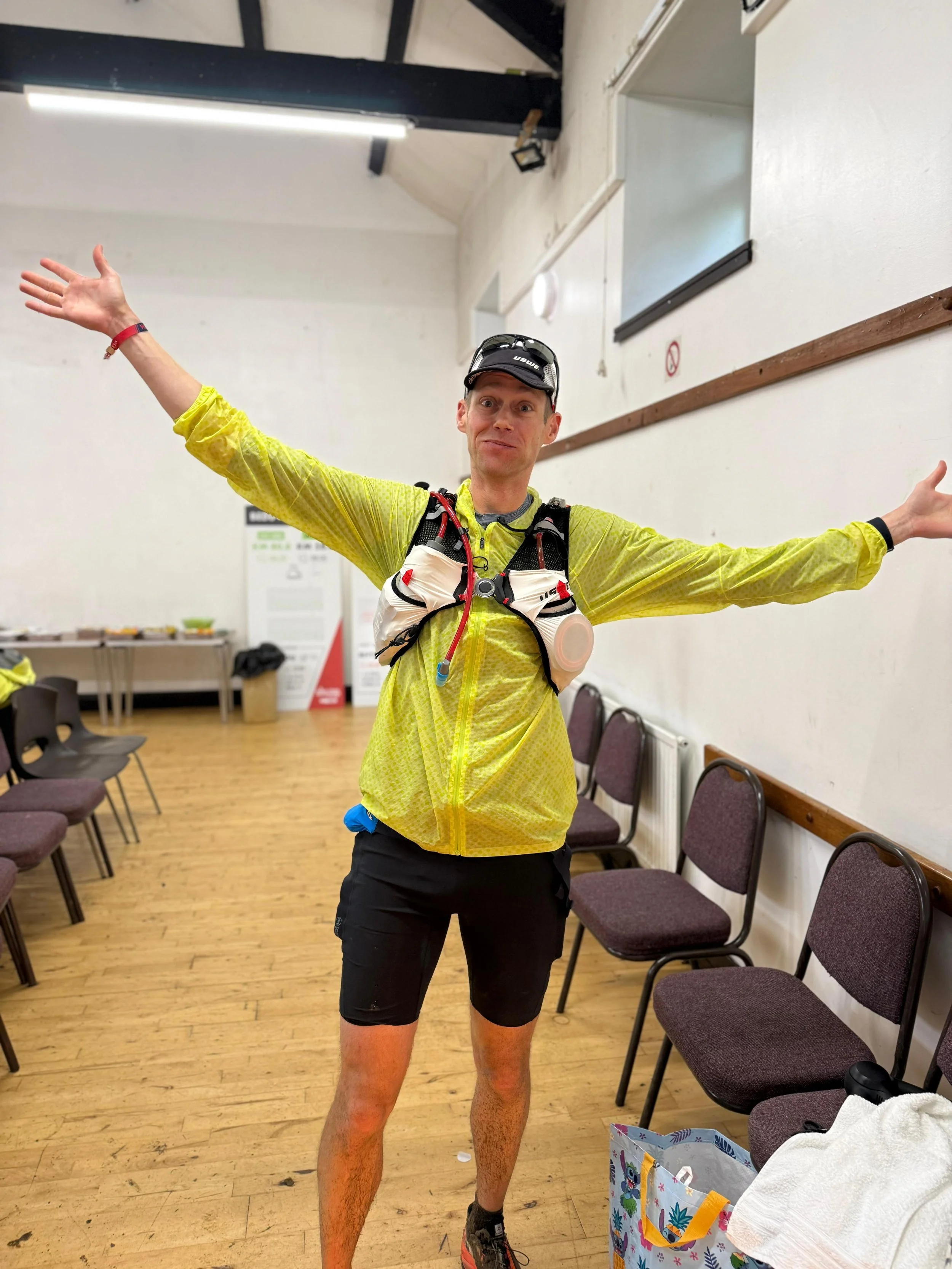
Looking just a bit crazed.
Beddgelert to the Finish: Mile 69.6 to 101.7
This race had already been so much harder than I expected. My past experience, particularly Tor des Geants, was the only thing getting me through and keeping me strong mentally.
The next climb featured 2,500 feet of ascent in 2 miles. As with most of the climbs, it started gradually and ratcheted up as we went. It was raining harder since leaving Beddgelert and getting colder and windier as we climbed. The trail turned into extremely steep scrambling, and I was struggling with the route finding given the sparse course marking. Throughout the race I had been back and forth with an extremely nice British guy named Jason, and we teamed up to navigate this section. And by that I mean I found all the wrong turns, and he then routed us back. I joked that it was a good thing we had a baseplate compass in our mandatory kit. I had no idea which way we were supposed to go, but I had a compass, by god.
Conditions were getting dangerous as we ascended. Temperatures in the 30s (F), driving rain, and howling winds. We took the time to stop and put gloves on. Mercifully we hit the peak. I was cold and tired, but the only answer was to keep moving to generate heat. The mountain guide said the next descent was wet, steep, and tricky, and we should be careful. Scary words from this dude.
I braced with my poles on the slip-and-slide down the mountain. Then I saw the craziest thing of the whole race. A group of hikers were coming up the mountain towards us. It was freezing with 40mph winds and pouring rain. I couldn’t possibly conceive of voluntarily going for a hike on a day like this. As we approached, I saw it was a big group of people in their 60s. The looked happy and carefree in these debilitating conditions. I stopped and jokingly asked one of them, “nice day for a hike?” He didn’t miss a beat and quipped back, “it turned out quite lovely, eh?”
This section remained tricky and steep, and it seemed to go on forever. While I had some gels left, I could tell that I was going to run out given how long it was taking. Jason and I stayed near each other, and I was very glad for the company. I was getting colder and wetter, and I made the call to fish my warm Patagonia layer out of my pack. It took a while to get it on, but it was 100% the right call and probably saved the rest of my race. While it isn’t waterproof, it is shockingly warm for its weight and helped stabilize my core temps. 60% of the field did not finish, and the weather and hypothermia was a big factor driving the high DNF rate.
I caught back up to Jason as we hit the steep climb up to the Nantille Ridge. The route they took us through here was utter madness. Class 4 scrambling with high consequence falls on both sides. Course markings were minimal, and I struggled to navigate through the jagged boulder maze. Twice I started downclimbing a route that ended in a big drop, and I had to back up. Jason caught up to me and asked how I was doing. “Not great” was all I could muster. He was again much better at the nav, and I held onto him as we made our way through.
We each complained how irresponsible that section was. The entire 100K and 100M field would have to go through it, many of them in the dark. There was a much easier and safer path just below that the race could have used. If they insisted on that route, they at least could have marked it better. OK, that’s enough complaining. It was time to get back to work.
The rest of the downhill was still steep, slippery, and tricky. I took a fall landing hard on my forearm. We finally got off that miserable mountain – I was cold, hungry, and angry coming into the aid station.
The folks at the aid station were just the nicest. They got me some mushroom soup while I stood there with a 1,000 yard stare housing sandwiches. I was starving after the effort of the last section. The soup was amazing and helped warm me up.
Jason had told me that the last three climbs were better than what we had been on. They would be “normal” long and steep climbs with nothing dangerous. Despite my whining and complaining, I had moved up to 32nd place. Many runners dropped at this aid station after the last section and with the conditions. Instead, I channeled my anger and set off with fire on the next climb.
We were going back up Snowdon via a different route, climbing 3,000 feet in 3.4 miles. Conditions were still terrible with freezing rain and snow. There were tons of day hikers coming off Snowdon. Who were all these crazy Welsh people out hiking in these conditions?! I put in some pump-up music and pushed hard up the climb, which helped keep warm.
After forever I hit the summit. Despite the effort I was putting out, I was freezing and soaking wet. There was a café at the summit that looked warm and inviting. I was also starving again and had no gels left with a long descent to the next aid station. It was mighty tempting, but I pushed on.
I ran the steep downhill well all-considering. My quads were now trashed, and my feet hurt immensely. But there was nothing to be done, and the only solution to those problems was getting to the finish. It was so great to see Trevor as I got to the final crewed aid station at mile 86.7. I was again in need of calories after the last two massive sections, which had take 7.5 hours. Trevor asked if I wanted hot food. I said I didn’t care and just wanted food, and I set about eating everything in sight – sandwiches, chips, cookies.
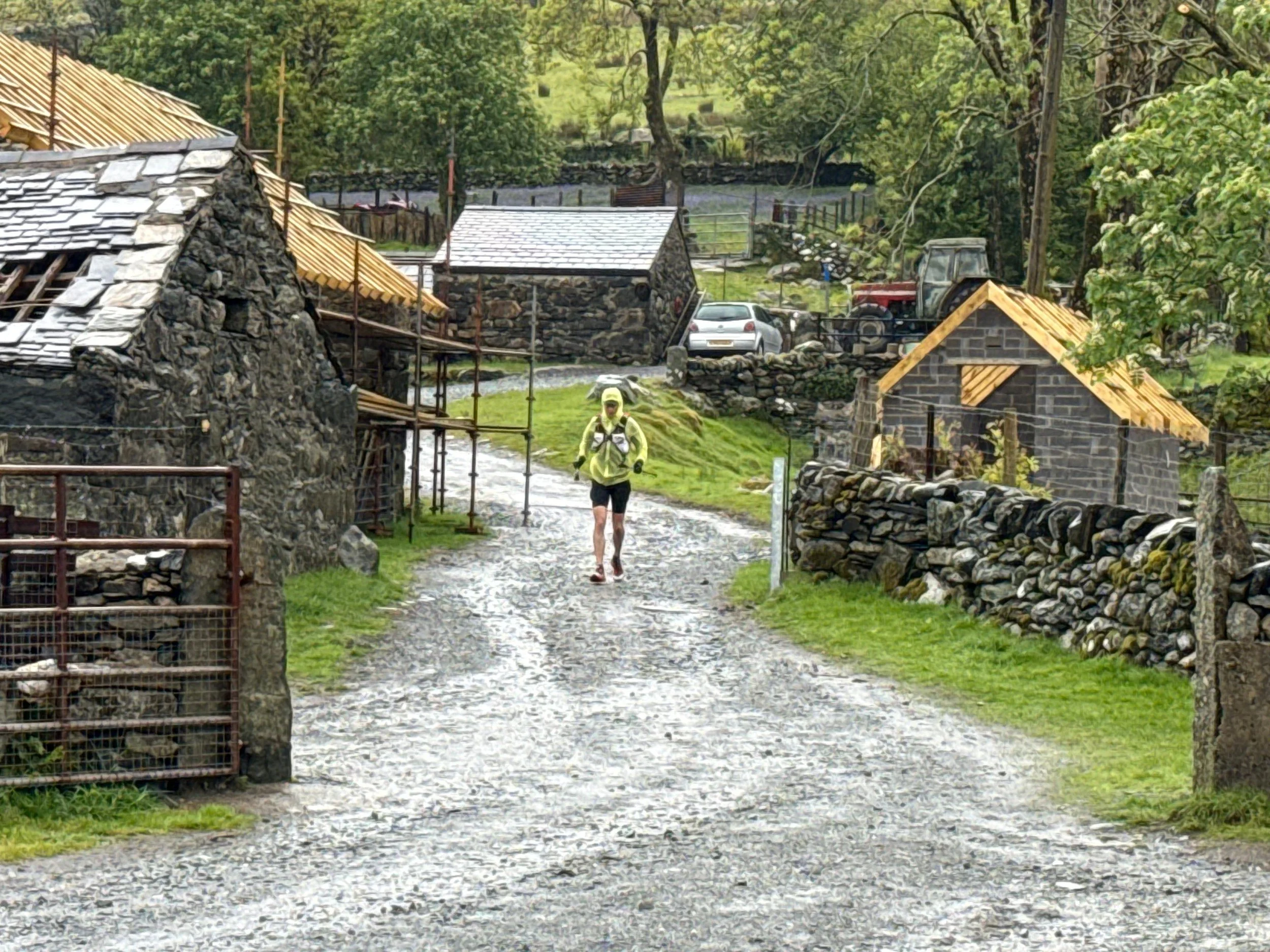
Coming down off Snowdon for the second time and ready for some food and dry layers.
We did a full change of my top layers, and it felt amazing to get dry clothes on after being cold and wet for I don’t know how long. We debated changing shoes and socks. My feet were seriously hurting, but I figured they would just get wet instantly, so we skipped it. I trudged back out for the last two climbs and descents.
I crossed a road and started the next climb. Sure enough it was covered in inches of mud. 1,000+ runners from the shorter distance races had been through here and churned it up. It certainly made the climb and descent slower and more difficult. We hit a 25-30% grade section of the climb, and I was really feeling the toll of the race.
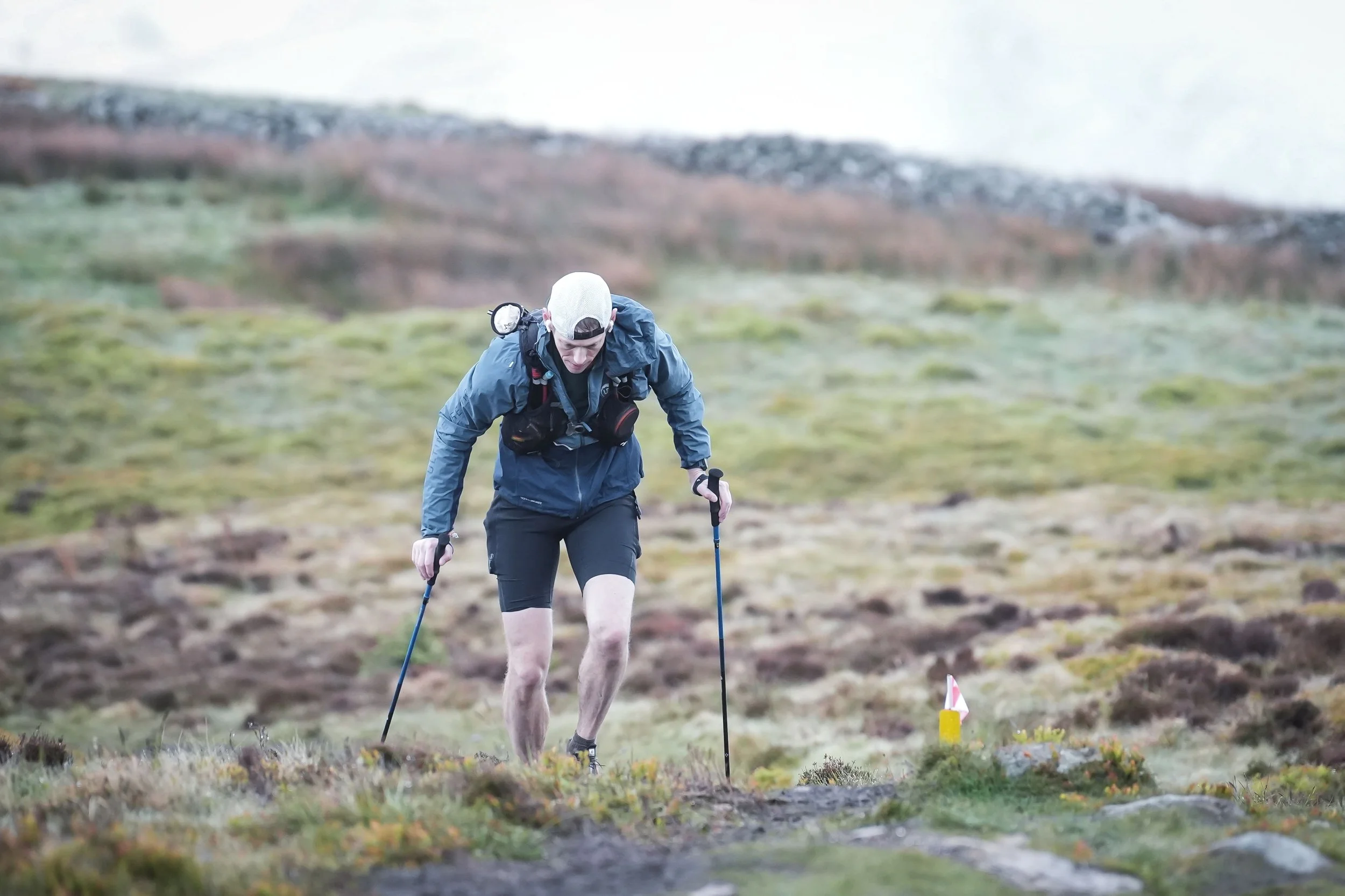
Head down and climb on
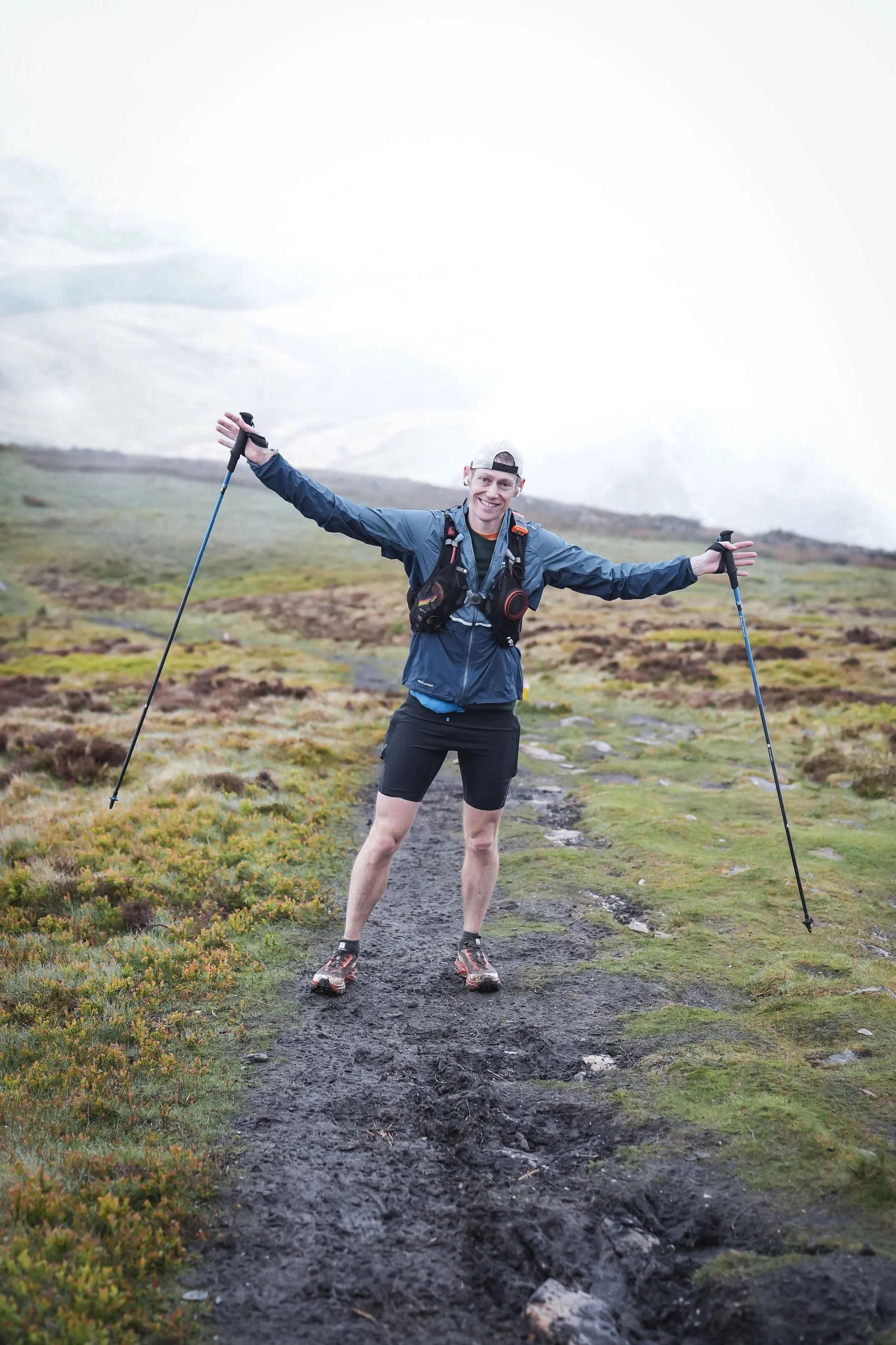
Looking way better than I feel
I got down to the final aid station now in 29th place. Since I stocked up well when I saw Trevor and was moving faster now, I didn’t really need anything. I grabbed some Butterfinger and flew out of the aid station with wonderful volunteers cheering me on.
The first part of the last climb was quick work up a steep gravel road. We were then diverted into a muddy forest trail to connect back to the main trail for the final climb. Out of nowhere, there were a few runners in front of me. Despite feeling shattered, I was still moving well uphill and caught up to them quickly. The three of us crested the summit together, and I was ready for a victory lap down to the finish. But Snowdonia wasn’t done with the challenges yet.
It had finally gotten dark on night two, and I needed my headlamp. However, fog had rolled in, and I couldn’t see anything with my light reflecting right back at me. That wasn’t an option with a tricky 20% grade descent, so I had to hold my headlamp in my hand close to the ground so I could get some visibility.
Finally we popped out of the fog, phew. Right as that happened, we hit an insanely muddy section churned up by the shorter distance runners before us. I instantly fell in the muck. It was impossible to navigate the steep, slippery descent, and I put up a 23-minute mile going downhill. Sigh.
I was in a pack of four when we finally hit the gravel road for the last part of the descent. OK, now I could start running and maybe I could crack the top 25? Right then my headlamp battery died. I switched it out just as cold rain set in. While I was only three miles to the finish, it was too far to risk hypothermia, so I put on my waterproof jacket. By the time I sorted my headlamp and jacket, all the runners I was around were now gone.
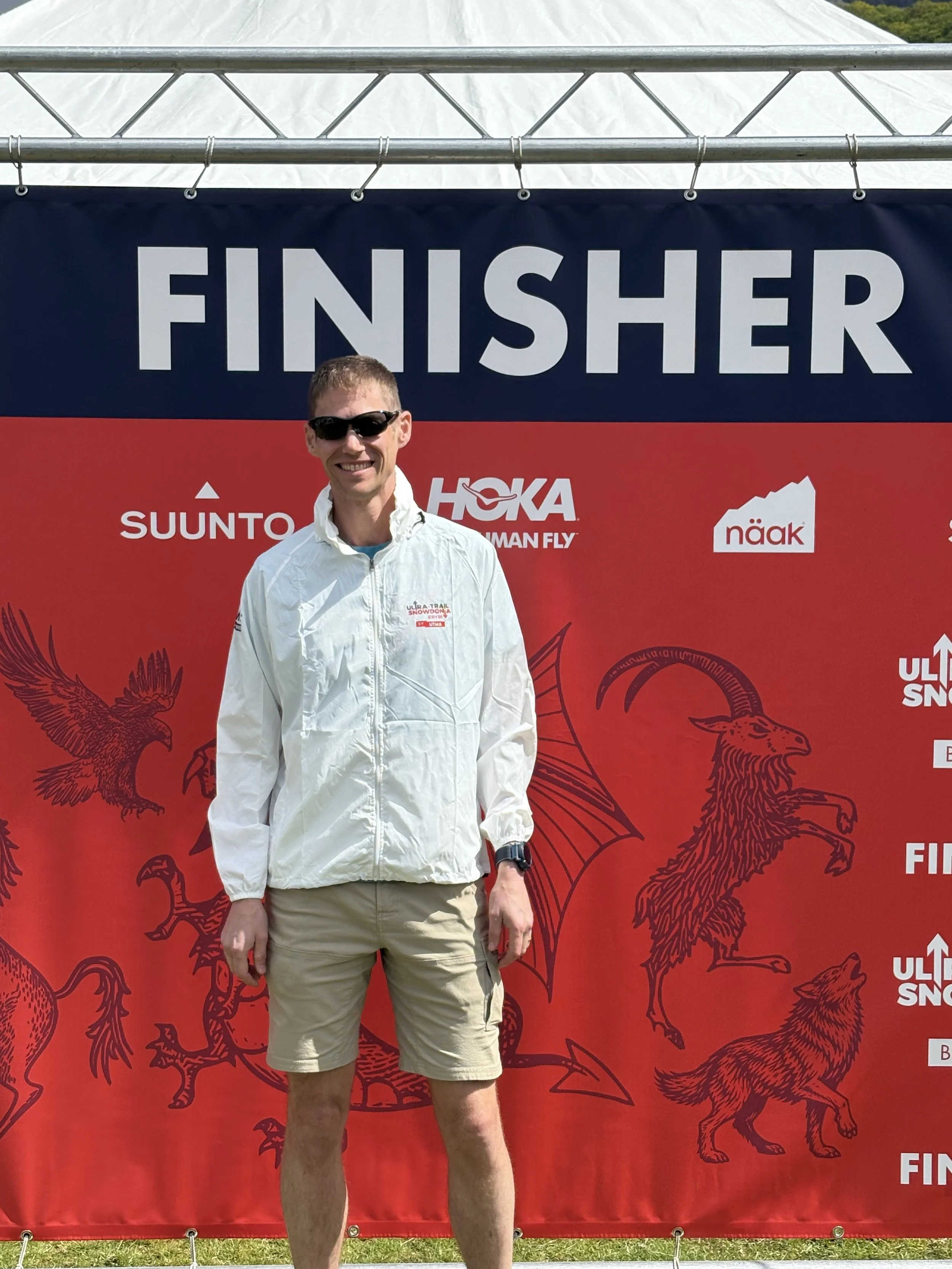
I felt the fire rising again and careened down the trail. I finally caught the pack and passed some of them. We had one more uphill bump, and I put in a big surge. After that I pushed hard downhill, overruling my screaming quads. I finished in 33h4min and 25th place for my 25th 100+ mile race.
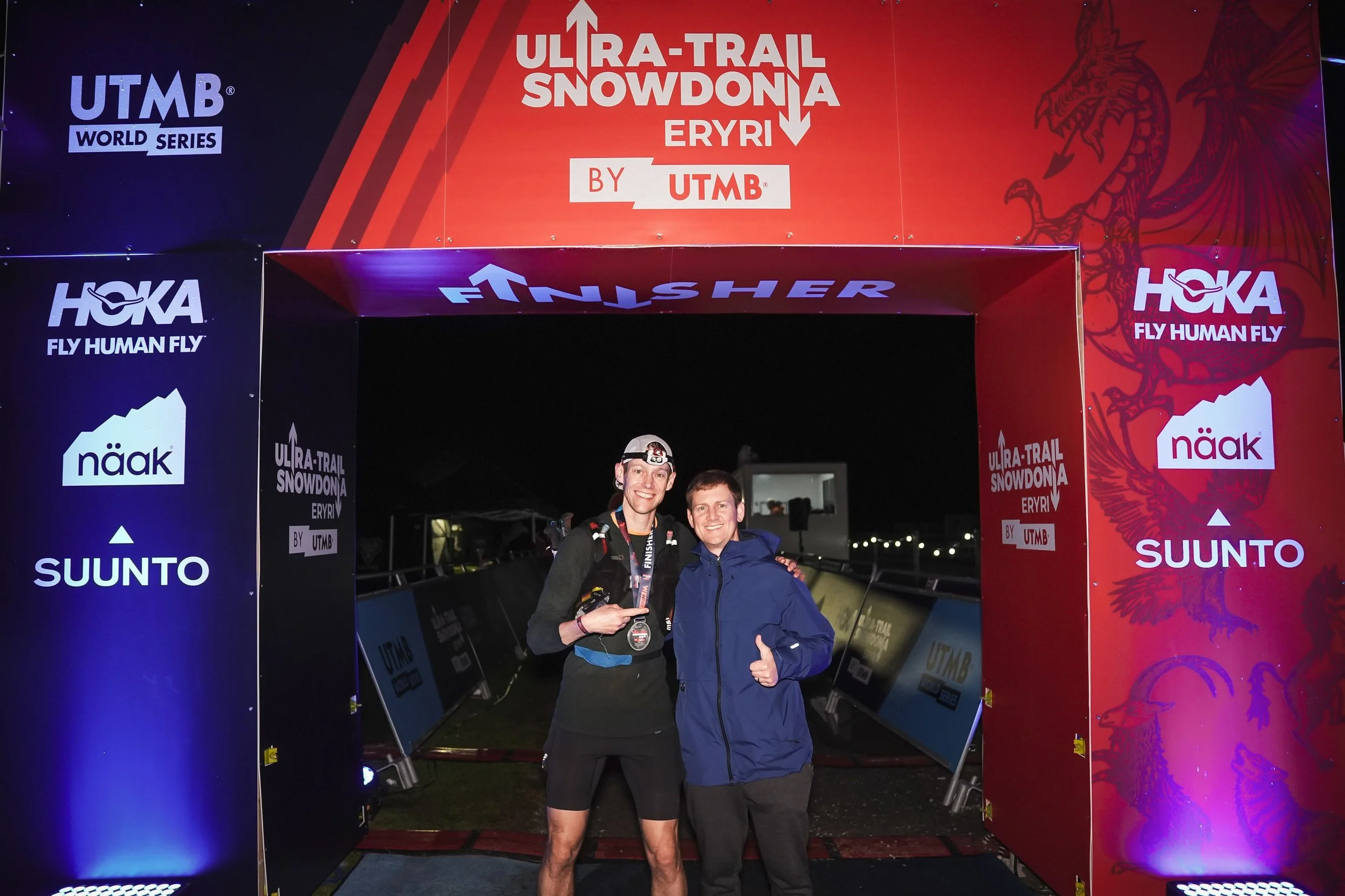
And just like that it’s all smiles
Conclusion
This race truly was savage beyond belief. It was so much harder than any 100-miler I’ve done (UTMB, Swiss Alps, Cruel Jewel, Hellbender, HURT). It wasn’t even close. I believe that mile per mile, it is actually harder than TOR and have heard others say the same, which is saying something.
In many ways I didn’t respect the course. I had minimal time in the mountains before with the road marathon block and running the Big Alta and Zion 100 with friends. I also didn’t do much research on the course itself, which is uncharacteristic for me.
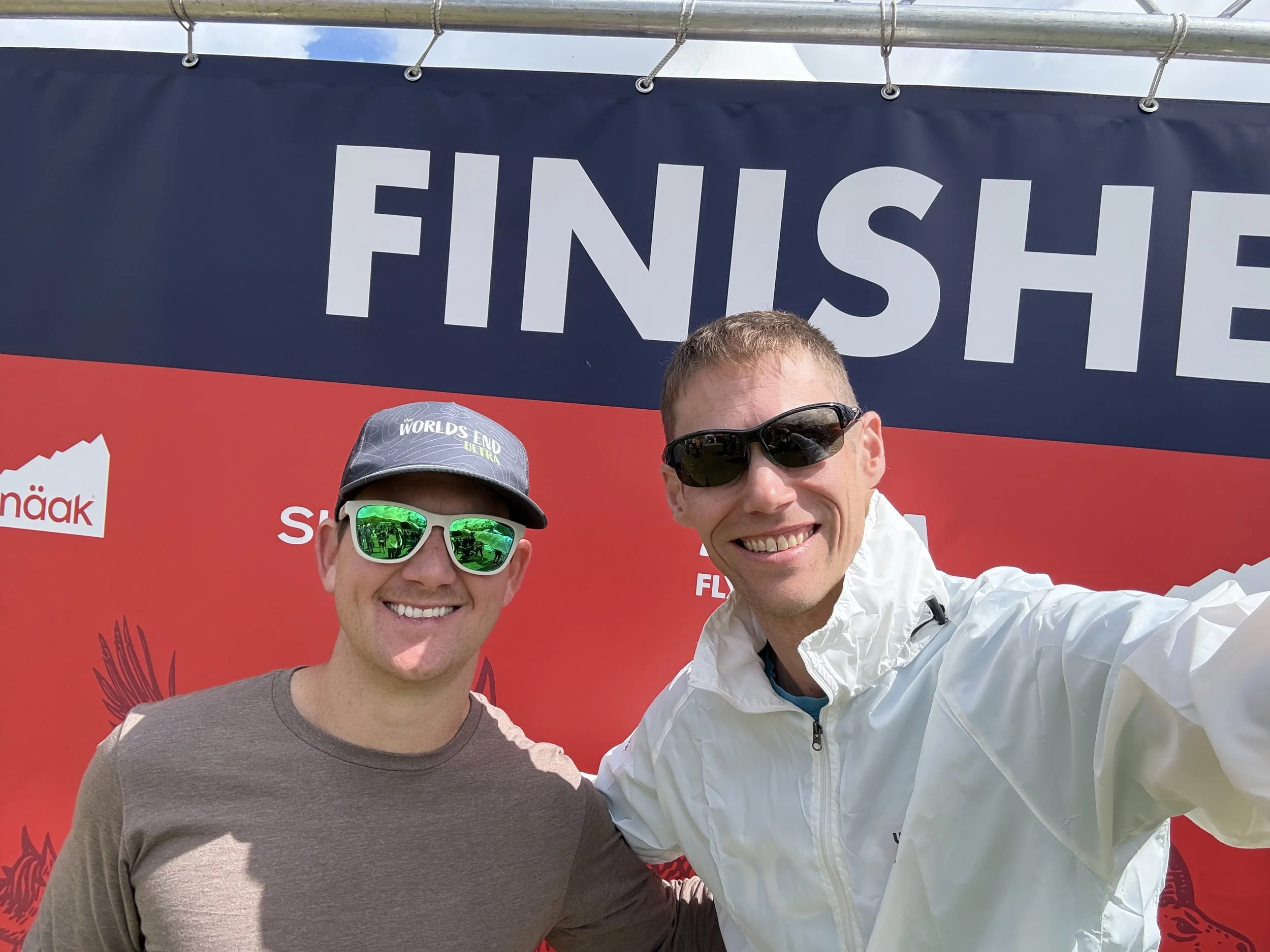
The only preparation I brought to the race was previous experience, and I needed every bit. I am also so glad and deeply grateful to Trevor for coming to crew. This was far too hard to do without help. He nailed a very difficult assignment crewing this one.
Part of me gutted it out and finished so I’d never have to come back again. But a race like this has a steep learning curve, and part of me feels I could do much better if I came back. The logistics are tough though, and it is hard to get to from the US. Maybe I will return someday, but it will probably be several years.
Massive thanks to the race organizers (minus the Nantille Ridge part), Trevor, the volunteers, and those supporting and cheering from home.